


By Virginia Siebella.
A transformative approach to ecological restoration is taking shape on the open savannas of Lukenya Hill, where stakeholders are shifting focus from symbolic tree planting to long-term environmental stewardship.
The initiative, spearheaded by the Maanzoni Million Tree Challenge (MMTC), is redefining conservation within the Athi Kapiti ecosystem by prioritising survival rates and ecosystem balance over sheer planting numbers.
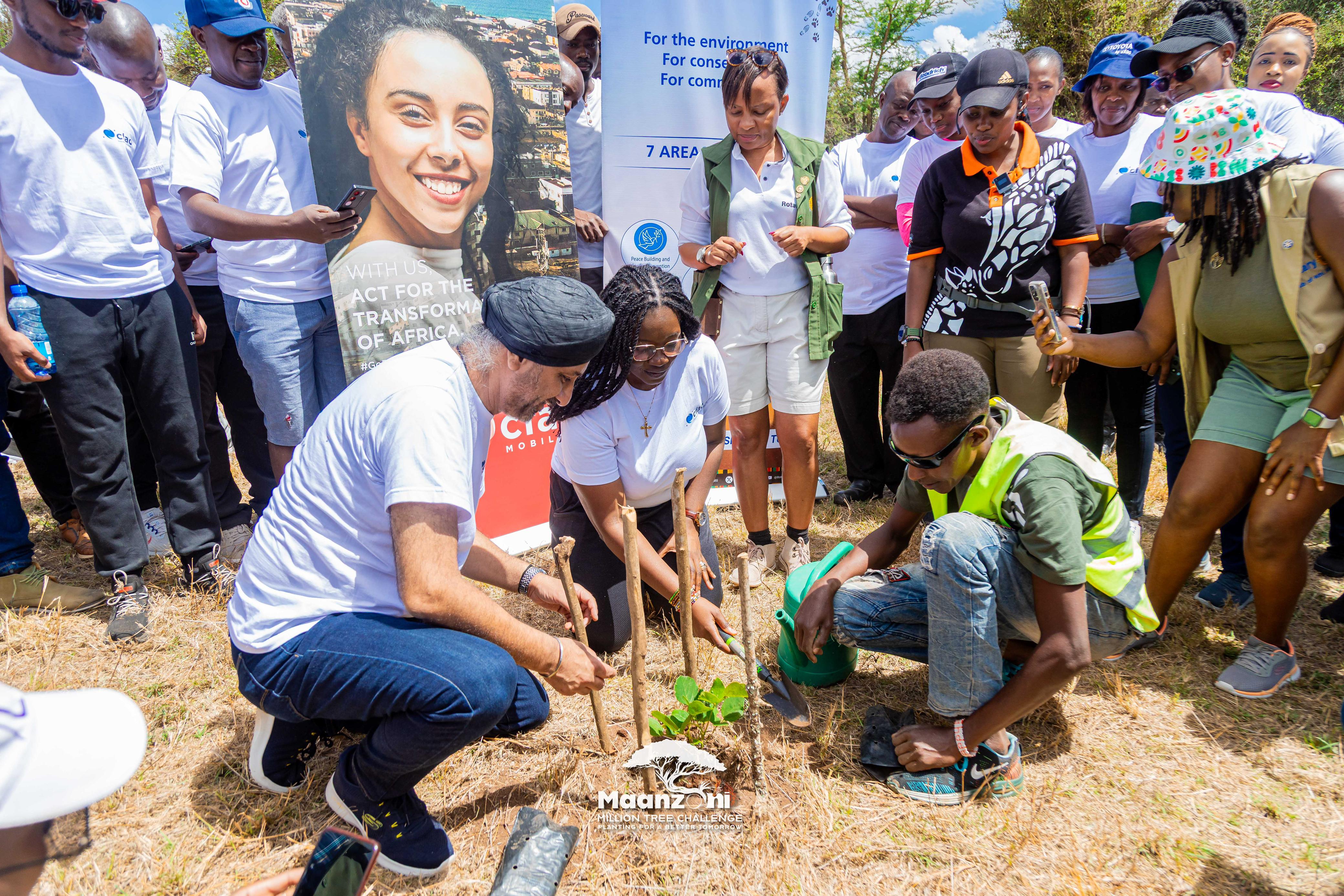
Launched in October 2025 during Mazingira Day, the programme began with the planting of 400 indigenous, endemic, and endangered trees under a partnership involving Rotary clubs, corporate sponsors, and conservation groups. However, organisers emphasise that the planting marked only the beginning of a structured restoration cycle.
Unlike conventional drives, the project introduced a one-year monitoring framework immediately after planting, ensuring each tree is nurtured through watering, protection, and regular assessment. The initiative targets a 90 per cent survival rate, underscoring a deliberate shift towards measurable ecological outcomes.
The Athi Kapiti ecosystem, spanning Machakos and Kajiado counties, remains one of Kenya’s last functional savanna landscapes supporting both wildlife and human livelihoods. Yet it faces mounting threats from land fragmentation, prolonged drought, and environmental degradation.
Experts caution that restoration in such landscapes requires ecological precision. Savannas rely on a balance of grasses, shrubs, and scattered trees — a system that differs significantly from forest ecosystems. Misguided afforestation efforts risk disrupting this balance.
At Lukenya Hill, restoration efforts are aligned with broader conservation strategies coordinated by the Athi Kapiti Wildlife Conservancies Association (AKWCA), ensuring ecosystem-wide coherence.
From October 2025 to early 2026, the programme deliberately paused additional planting, focusing instead on stewardship. Activities included installation of watering systems, reinforcement of protective structures against wildlife browsing, and continuous monitoring of tree growth.
Project stakeholders highlight that this approach reflects a broader shift in environmental conservation — from short-term campaigns to sustained, science-driven interventions.
The initiative is also anchored in multi-sector collaboration. Corporate partners have supported tree sponsorship and long-term engagement, while civic organisations have mobilised communities. Schools and students have been actively involved, transforming the site into a practical learning space for environmental education.
Organisers say the programme is influencing behavioural change, encouraging communities to take responsibility for conservation rather than merely participating in one-off events.
A key feature of the project is its focus on restoring a functional savanna rather than creating dense forest cover. Indigenous species are being used to maintain biodiversity, support wildlife movement, and preserve the ecological integrity of the landscape.
The development of a 1,000-tree indigenous arboretum forms part of this strategy, providing both a conservation hub and an educational resource.
The final planting phase is scheduled for March 21, 2026, to coincide with the International Day of Forests. Organisers intend to use the occasion to highlight the importance of protecting diverse ecosystems, including savannas, which are often overlooked in global conservation narratives.
The upcoming phase will see stakeholders return to plant the remaining 600 trees, completing the arboretum and reinforcing community participation.
As the project nears completion, it is emerging as a model for community-led, ecosystem-based restoration. Its emphasis on stewardship, education, and partnerships signals a shift away from fragmented environmental efforts towards sustainable, long-term impact.
At Lukenya Hill, restoration is no longer defined by a single event, but by an ongoing commitment to protect and sustain the landscape.