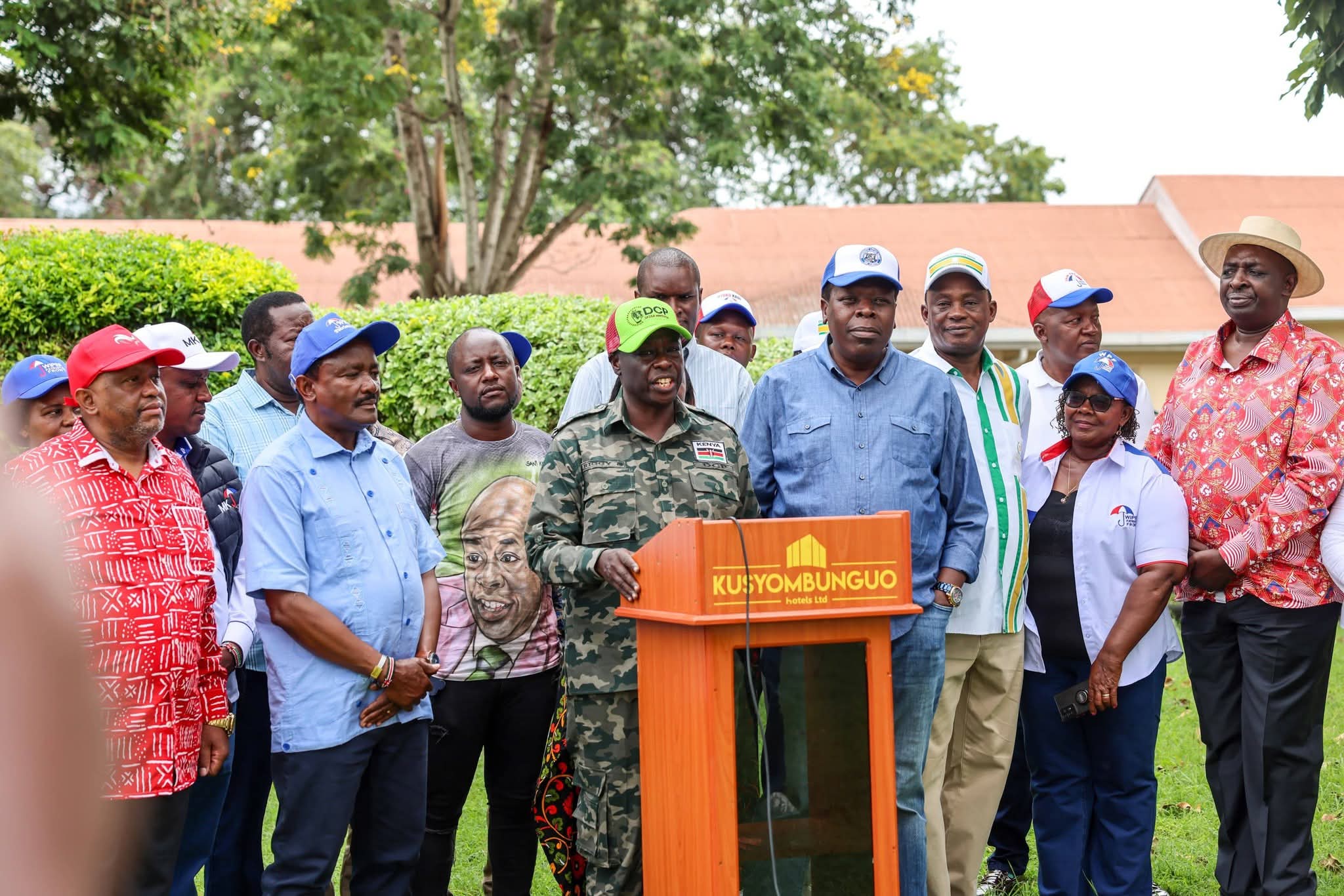
 Opposition leaders during a press conference at Kusyombunguo Hotel in Wote on March 31, 2026. Photo by Andrew Mbuva.


By Fredrick Kioko
Opposition leaders have intensified their criticism of the government’s Social Health Authority (SHA), alleging massive corruption, lack of transparency, and systemic failure in the rollout of the health insurance program.
Speaking during a press conference at Kusyombunguo Hotel in Wote ahead of the second day of their Makueni tour, former Deputy President Rigathi Gachagua, alongside Eugene Wamalwa and Justin Muturi, accused President William Ruto’s administration of using the SHA as a conduit to siphon public funds.
Gachagua claimed the health scheme, which replaced the defunct National Hospital Insurance Fund (NHIF), was not designed to improve healthcare access but to facilitate what he termed as “a grand theft of public resources.” He alleged that while NHIF had proposed an upgrade costing approximately KSh 800 million, the SHA system was procured at an inflated cost of KSh 104 billion.
According to Gachagua, the system itself was acquired for about KSh 1 billion, with the remaining funds allegedly misappropriated through a consortium of private firms. He further linked some of the companies involved to senior government officials, including Cabinet Secretary Aden Duale, claims that have not been independently verified.
“The people of Kenya already know that SHA is not working,” Gachagua said, citing feedback from residents during rallies across Makueni County. He predicted that the system would collapse within six months due to what he described as poor design and corruption.
Wamalwa echoed these concerns, urging the government to take seriously both the allegations raised by opposition leaders and recent court rulings questioning the procurement and implementation of the SHA system. He warned against trivializing the matter, emphasizing that healthcare is a constitutional right and should not be compromised.
In addition to the SHA controversy, the opposition raised alarm over broader governance issues, including alleged misuse of public funds, lack of accountability, and what they described as increasing disregard for the rule of law.
The leaders also referenced recent incidents, including late-night security operations targeting private properties and disputes involving major institutions such as Nairobi Hospital, which they claimed point to a worrying trend of state overreach.
On electoral matters, Wamalwa called on the Independent Electoral and Boundaries Commission (IEBC) to address operational challenges in the ongoing mass voter registration exercise. He cited concerns over inadequate equipment and technical failures, even as youth turnout reportedly surged following civic mobilization campaigns.
The opposition further demanded reforms within the electoral body, including the termination of contracts with controversial technology providers and the establishment of a clear electoral roadmap ahead of the next general election.
Muturi, on his part, emphasized the need for transparency in government programs, particularly those involving public funds. He questioned the opacity surrounding SHA payments and called for full disclosure to Kenyans.
The leaders also touched on foreign policy and trade concerns, alleging that government dealings with external entities could be negatively impacting key sectors such as tea exports.
As their tour continues across Ukambani, the opposition signaled plans to sustain pressure on the government, framing their campaign as a push for accountability, electoral reforms, and what they termed a “reset” of the country’s governance trajectory.