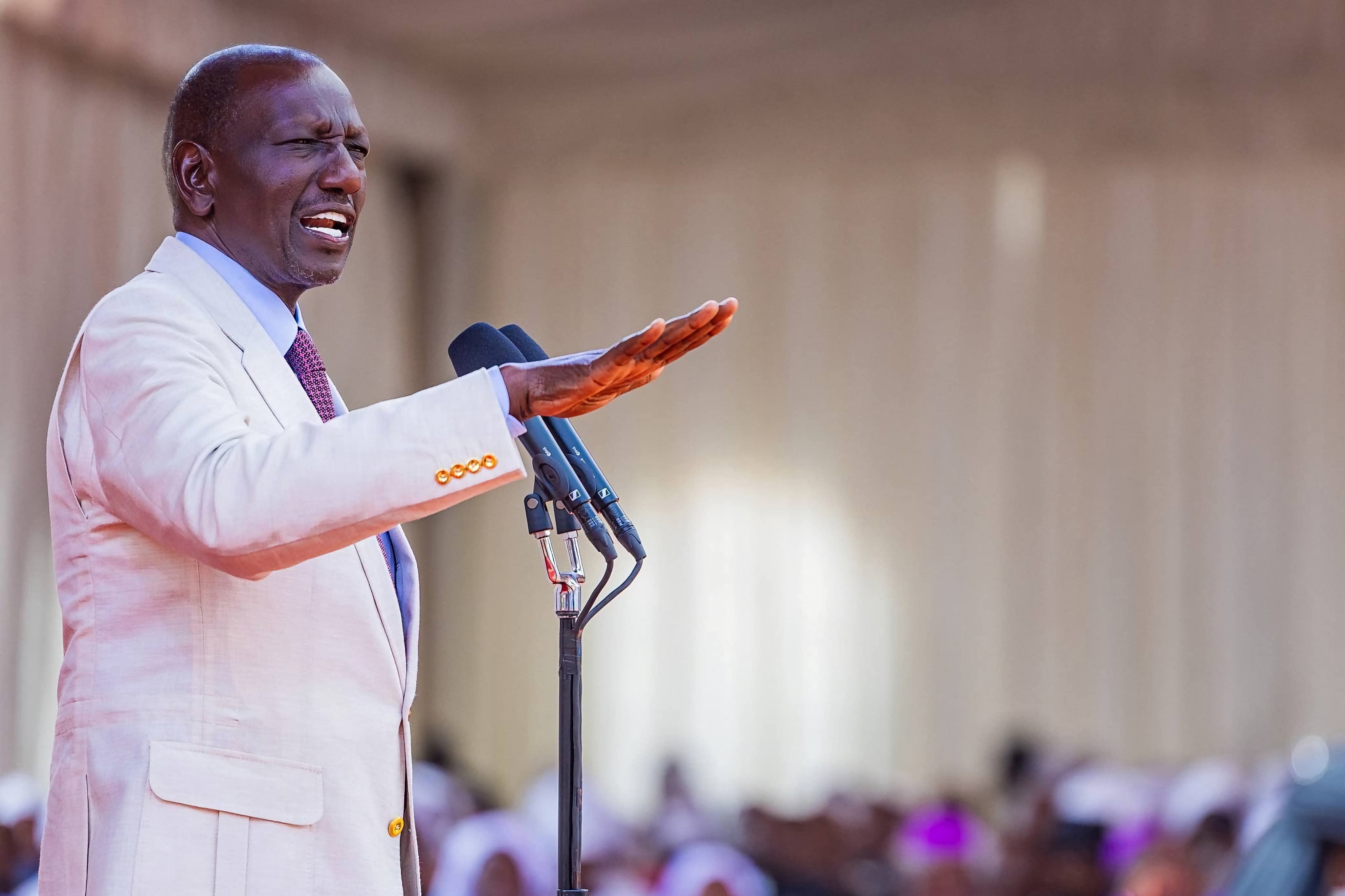
 President William Ruto Speaking during the ABC Annual National Women Congress at Scott Theological University. Photo Courtesy


By Fredrick Kioko.
President William Ruto has called on Kenyan leaders to rise above ethnic politics and divisive rhetoric and instead champion unity, peace and development as the country charts its future.
Speaking during the ABC Annual National Women Congress at Scott Theological University, President Ruto said leaders should be judged by their record of service and development rather than insults, hate speech, tribalism and empty political slogans.
The President said the standards of leadership had risen and Kenyans should now demand accountability, clear plans and a demonstrated vision from those seeking leadership positions.
He urged politicians to focus on development, saying their performance and the work they had done for the people should be the ultimate test of their suitability for leadership.
“The bar of leadership is high,” Ruto said, adding that leadership was no longer about insults, slogans and divisive politics, but about accounts, plans, vision and a proven track record.
The Head of State warned against leaders who seek to divide Kenyans along tribal, ethnic or regional lines, including through references to communities as “cousins.”
He instead urged leaders to promote peace and national unity, insisting that Kenya belongs equally to all its citizens and communities.
Ruto said every tribe in the country was important and deserved equal treatment and access to development without discrimination.
He maintained that his administration would not engage in politics based on ethnicity or tribalism, saying development must be felt equitably across all parts of the country.
Former State House Chief of Staff Nzioka Waita echoed the President’s sentiments, saying Kenyans had increasingly moved beyond the politics of ethnicity and tribalism.
Waita said the country now needed a politics anchored on development, with every Kenyan and every region benefiting equally regardless of the size or population of their community.
He said the development agenda implemented since President Ruto took office was already being felt across the three Ukambani counties, with projects being distributed equitably.
Mwala MP Vincent Musyoka called on Kenyans to pray for peace and stability, saying the country should be protected from war, violence and political goonism.
Musyoka praised President Ruto’s leadership, describing him as a rare leader, and said politics based merely on words and promises would not improve the lives of Kenyans.
He said leaders should instead be assessed on the tangible development they deliver.
The legislator said Ukambani had suffered discrimination for many years but was now beginning to witness signs of development, adding that the region needed leaders with vision and a development-conscious mindset.
“Electing leaders should not be like a beauty contest,” Musyoka said, stressing that voters should choose leaders based on their vision and ability to deliver development.
Machakos MP Caleb Mule said the development projects being implemented in Ukambani would ultimately speak for themselves.
Mbeere North MP Mwengi Mutuse also defended the government’s economic record, saying the cost of maize flour had started declining while the value of the Kenyan shilling had improved against the US dollar.
Mutuse said the exchange rate had fallen from about Sh160 to the dollar to around Sh130, while also pointing to increased employment opportunities under the current administration.
He claimed that while previous governments employed about 5,000 people annually, more than 100,000 people had secured employment within the first two years of the Kenya Kwanza administration, with another 24,000 expected to be employed this year.
Archbishop Timothy Ndambuki also praised the government’s development agenda, saying regions that had previously been marginalised were now being considered in the distribution of development projects.
The leaders spoke as they attended the ABC Annual National Women Congress held at Scott Theological University, where the call for national unity and equitable development featured prominently.