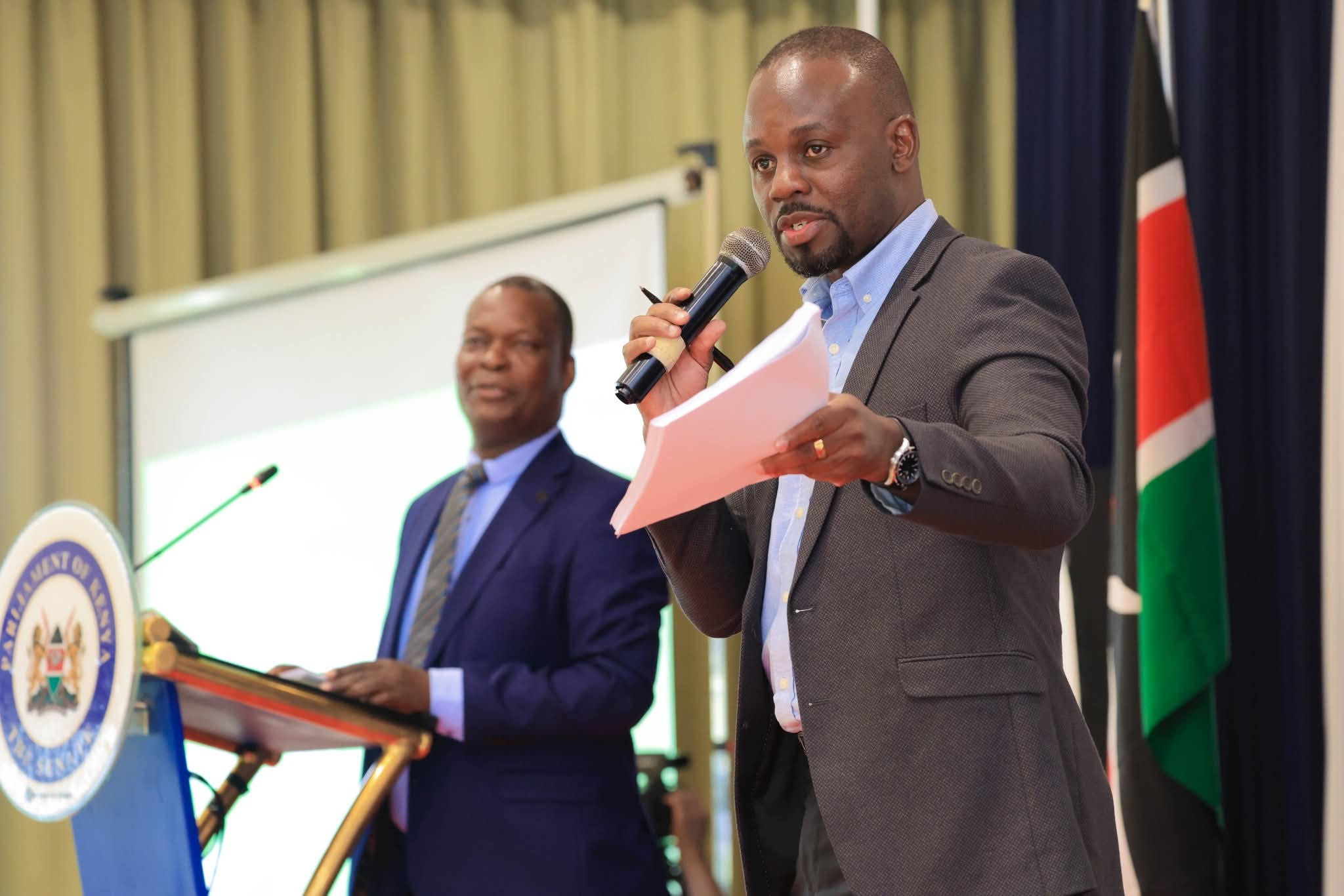
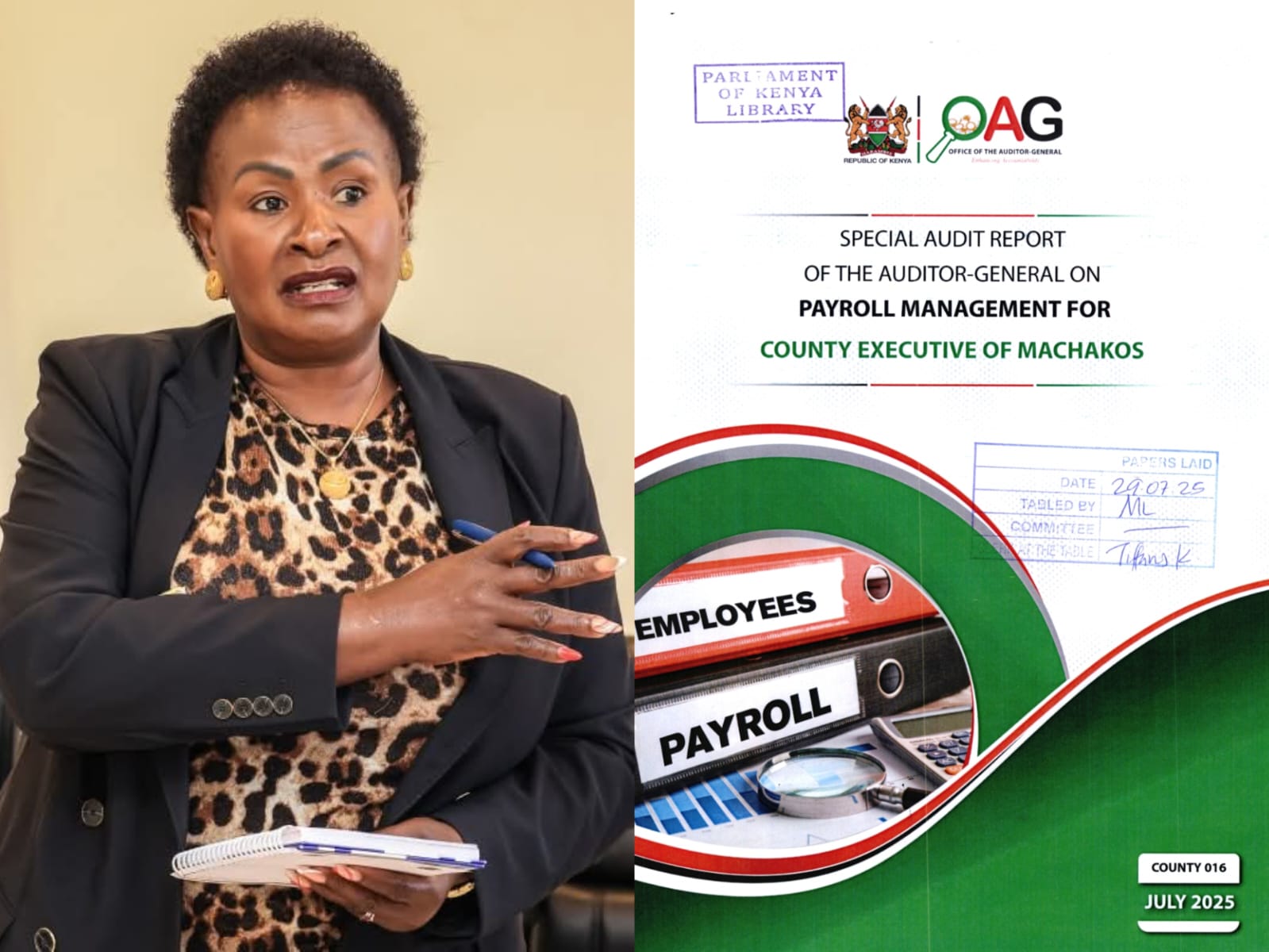
 Machakos Governor Wavinya Ndeti. File Photo.


By Andrew Mbuva
A special audit by the Office of the Auditor-General has exposed widespread weaknesses, irregularities and potential loss of public funds in the management of payroll at the Machakos County Executive, painting a troubling picture of poor controls, inflated wage bills and questionable staff records.
The audit, covering the 2021/2022, 2022/2023 and 2023/2024 financial years, found that Machakos County persistently breached the law requiring personnel costs to be capped at 35 per cent of total county revenue. Instead, the wage bill consumed between 37 per cent and 55 per cent of revenue over the three-year period, significantly straining the county’s finances and crowding out funds meant for development and essential services.
According to the report tabled in Parliament in July 2025, the county’s ballooning payroll was worsened by weak budgeting practices and misaligned systems. Budget vote heads in the payroll systems—both the Integrated Payroll and Personnel Database (IPPD) and the newer Human Resource Information System-Kenya (HRIS-Ke)—did not match those approved in the county budget or configured in the Integrated Financial Management Information System (IFMIS). This mismatch, auditors warned, increased the risk of misallocation and misuse of public funds.
The audit further revealed serious gaps in human resource planning. Despite recruiting 701 employees during the audit period, the county had no approved staff establishment or annual recruitment plans. As a result, auditors could not determine whether hiring decisions were justified, affordable or aligned with service delivery needs—raising fears of overstaffing and uncontrolled employment costs.
Perhaps most alarming were findings pointing to possible “ghost workers” and payroll fraud. Chief officers failed to account for 1,176 employees who appeared in the payroll but not in departmental staff lists. These employees were paid a staggering Sh2.48 billion over the three years under review. In addition, 23 employees who collectively earned Sh75.7 million failed to appear for mandatory physical verification, casting doubt on their existence.
The audit also uncovered cases of double pay. Nine officers were found to be drawing salaries simultaneously from Machakos County and other government entities, while 11 employees received salaries through both the IPPD system and manual payrolls, resulting in double payments. Manual payrolls processed through Excel spreadsheets accounted for Sh583.9 million, a practice auditors described as highly vulnerable to manipulation and fraud.
Irregular and unlawful payments further deepened the crisis. The county paid unauthorized salary arrears, extraneous allowances and overpaid health risk and commuter allowances amounting to millions of shillings. During the migration from IPPD to HRIS-Ke, additional overpayments and underpayments totalling more than Sh10 million were recorded due to poor data validation and weak controls.
Statutory compliance was equally wanting. The county delayed remittance of PAYE, NHIF and NSSF deductions, exposed itself to penalties and failed to deduct tax from dozens of employees without valid exemptions. Auditors also flagged violations of labour laws, including paying acting allowances beyond the legally permitted six months and allowing hundreds of employees to earn net pay below one-third of their basic salary.
The report concludes that the payroll failures reflect systemic weaknesses in governance, oversight and internal controls at the Machakos County Executive. It warns that unless urgent corrective measures are taken—including recovery of irregular payments, suspension of unverified staff, and strict enforcement of payroll controls—the county risks continued financial losses, legal sanctions and erosion of public trust.
The Auditor-General has recommended sweeping reforms, including strict adherence to wage bill ceilings, full alignment of payroll systems with approved budgets, automation of arrears processing, and holding responsible officers personally accountable for losses.