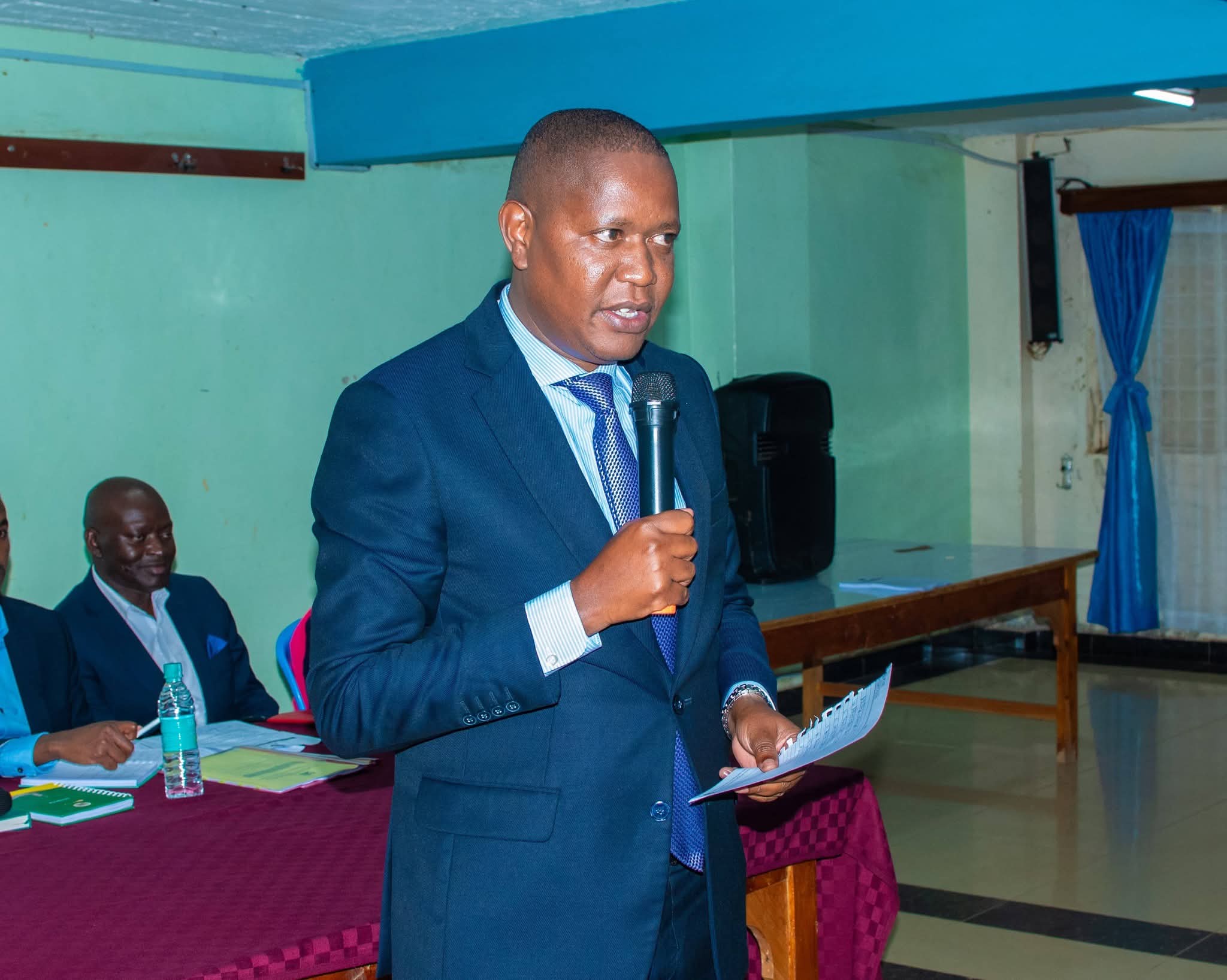
 Kibwezi West MP Mwengi Mutuse Speaking during a public participation forum on the proposed Public Participation Bill, No. 44 of 2025, held in Wote, Makueni County on March 23, 2026. Photo by Courtesy.


By Andrew Mbuva.
Village elders across the country are set to begin receiving government stipends from July this year, following legislative efforts aimed at formalizing their role within Kenya’s governance structure.
Kibwezi West MP Mwengi Mutuse said the move traces back to his first assignment in Parliament, where he introduced a bill to amend the law and anchor the role of village elders within the legal framework.
“My first assignment in Parliament was to introduce amendments to formally recognize village elders in law. I am pleased that this effort is now bearing fruit,” said Mutuse.
Speaking during a public participation forum on the proposed Public Participation Bill, No. 44 of 2025, held in Wote, Makueni County, and later at Cathedral Hall in Machakos County, Mutuse noted that President William Ruto has already announced the rollout of the stipend programme.
“The President has confirmed that starting July, all village elders will begin receiving a stipend in recognition of the critical role they play at the grassroots,” he said.
Mutuse, who sits on the National Assembly Budget Committee, said the ongoing public participation process will inform the allocation of funds in the upcoming financial year to support the initiative.
He emphasized that village elders have long served communities without pay despite handling key administrative and conflict resolution responsibilities.
“For many years, these elders have worked diligently without any form of compensation. This allowance is meant to facilitate their duties, not as a formal salary,” he clarified.
The legislator, however, cautioned National Government administrators against displacing current village elders once the funds are disbursed.
“County Commissioners and their deputies must not replace those who have been serving. These are individuals who have held communities together for years without pay, and they deserve to benefit from this programme,” he stated.
On agriculture, Mutuse called for equitable government support across all crop sectors, noting disparities in how farmers are currently assisted.
He observed that farmers growing coffee, sugarcane, tea, and miraa benefit from structured government support, while those cultivating crops common in Makueni County remain largely excluded.
“Farmers growing oranges, mangoes, cowpeas, and green grams also deserve government support. It is not fair that only select crops receive attention,” he said.
Mutuse revealed plans to introduce legislation that would extend funding and policy support to these crops, questioning the criteria used to classify cash crops.
“Coffee is classified as a cash crop and sells at about KSh100 per kilogram, yet green grams can fetch up to KSh150 per kilogram. We must rethink how we define and support cash crops,” he added.
The public participation exercise was led by members of the Justice and Legal Affairs Committee, including Marakwet West MP Timothy Kipchumba Toroitich and Nominated MP Zulekha Mohammed, alongside parliamentary staff, as they collected views from residents on the proposed legislation.