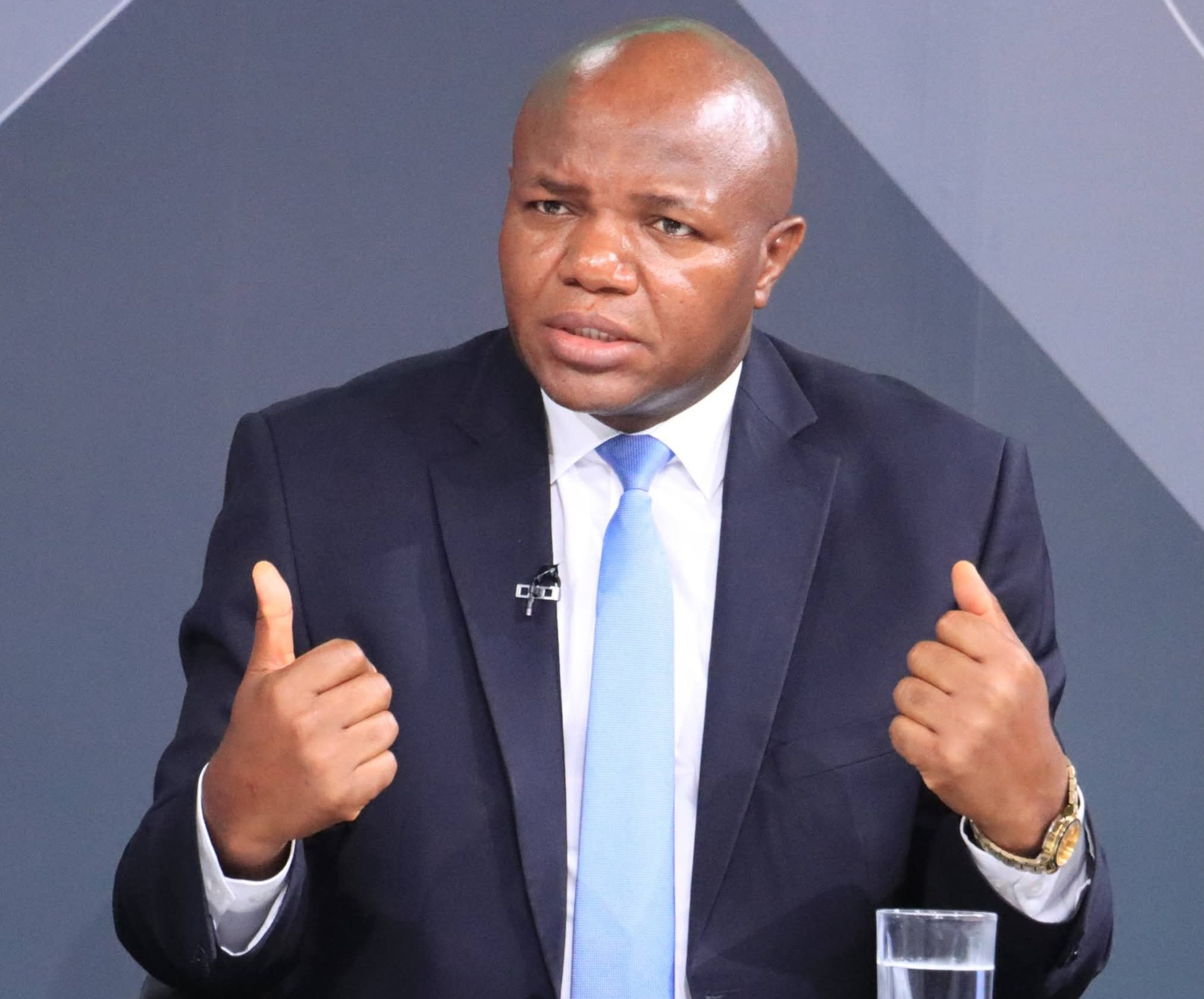
 Machakos Deputy Governor Francis Mwangangi in a past Interview. Photo Courtesy.


By Andrew Mbuva.
Machakos Deputy Governor Francis Mwangangi has launched a sharp critique of the national government, accusing it of failing to implement key reform commitments, mishandling public debt, and overseeing inhumane demolitions in Nairobi.
Speaking during a radio interview on Thursday morning, Mwangangi said the government’s widely publicized 10-point agenda had yielded little tangible results, describing it as a political exercise rather than a genuine reform plan.
According to the deputy governor, politics has dominated nearly every aspect of governance in the country, undermining efforts to deliver meaningful change.
“Everything in Kenya has become politics. Even the ten-point agenda was brought in as a political tool,” he said.
Mwangangi rated the government’s performance harshly, saying it had failed to deliver on its promises.
“If I was asked to rank the government’s performance out of ten, I would give it zero. There is absolutely nothing that has been achieved,” he said.
He further criticized the implementation of the National Dialogue Committee (NADCO) report, arguing that the recommendations agreed upon during the bipartisan talks have not been acted upon.
“Ask them what the level of implementation of the NADCO report is — it is zero. Even compensation for the victims who were killed during demonstrations has not been addressed,” he said.
Mwangangi also questioned the government’s commitment to the timelines outlined in the reform framework, noting that the agreed implementation period had already elapsed without visible progress.
“This process had clear timelines and a clear framework on what was supposed to be done and by when. All those timelines have passed,” he added.
On the proposed National Infrastructure Fund, the deputy governor warned that the initiative could worsen the country’s already high debt burden.
He said he had carefully studied the law several times, including both the original bill and the version that was eventually signed into law.
“When you look at the governance structure and the proposals in that law, it is likely to increase the country’s debt through channels that are not the normal borrowing mechanisms,” he said.
Mwangangi expressed concern that the fund could create additional financial obligations at a time when Kenya is already struggling with a high public debt level.
“We already have a high rate of debt in this country, and this proposal could worsen the situation,” he noted.
The deputy governor also condemned recent demolitions in Nairobi, terming them inhumane and calling for accountability from the county leadership.
He said authorities should show empathy to affected residents and offer an apology to the victims whose homes were destroyed.
“These demolitions are inhumane. When such things happen, leaders should take the opportunity to apologise to the victims,” he said.
Mwangangi questioned the absence of Nairobi Governor Johnson Sakaja during the demolitions, arguing that the county leadership should take responsibility for actions occurring under its administration.
“Where was the Nairobi Governor when all this was happening? He should ask himself whether such actions should occur under his administration,” he said.
Despite his criticism, Mwangangi insisted that the opposition’s stance was not driven by political hostility but by the need to hold the government accountable.
“We are not criticizing the government for the sake of it. We will stand by the truth because ultimately there is God in heaven,” he said.