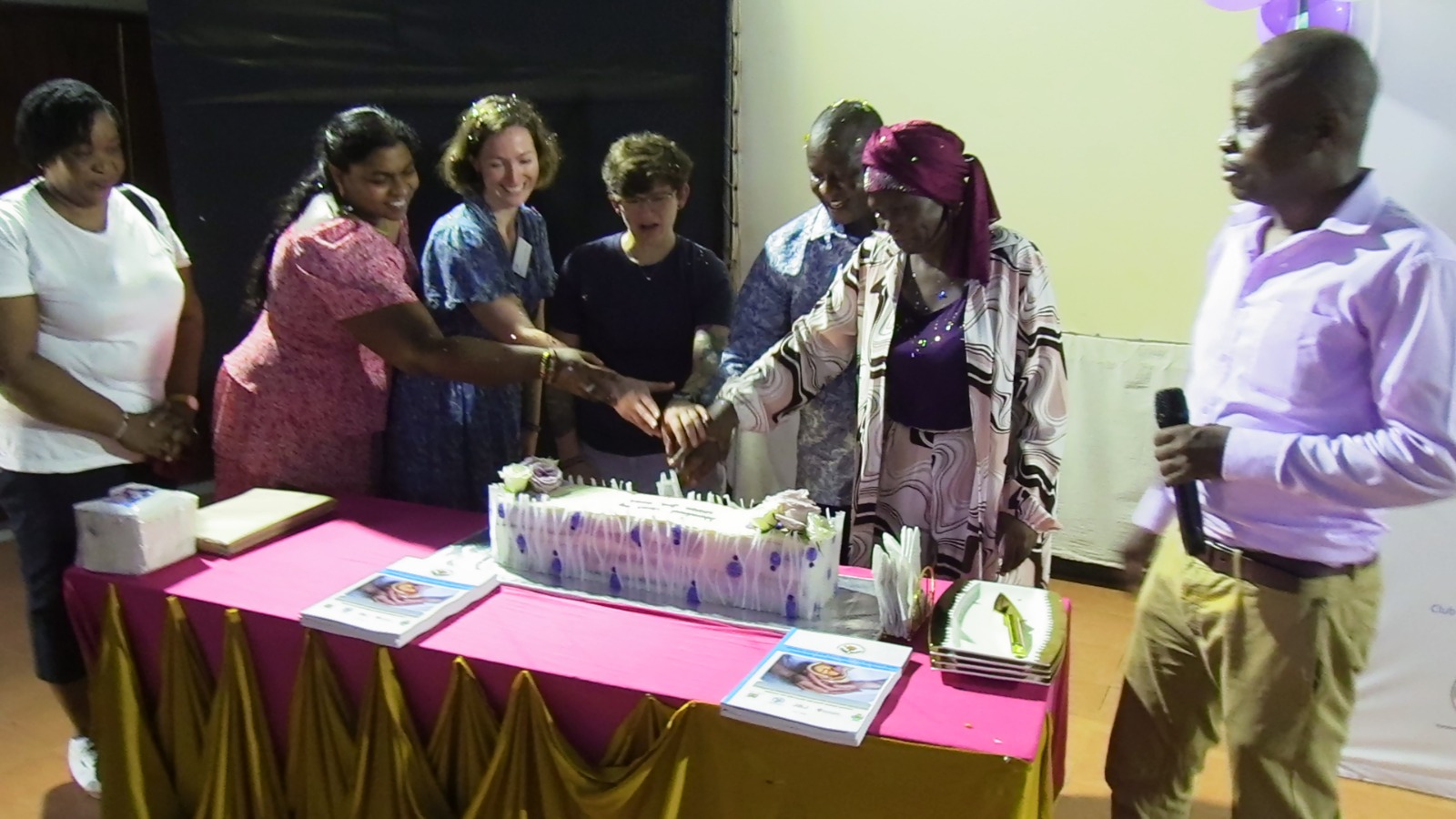
 Edward Serem, Deputy Director Reproductive, Maternal and Adolescent health at the Ministry of health and Habiba Mohamed, founder and director of Women And Development Against Distress In Africa (WADADIA- HABITAT) Mother and Child Holistic Health and Training Hospital in Malindi town Kilifi County during the launch of the Holistic Care and Treatment for Women with Childbirth and Other Pelvic Floor Injuries book developed by WADADIA in collaboration with clinical and reproductive maternal and child health and health systems partners to celebrate the International Women’s Day on Sunday, March, 8, 2026. Photo by Ben Okweingoti.


By Ben Okweingoti.
The Ministry of Health, in partnership with development organizations, has intensified efforts to reduce obstetric fistula and other maternal health complications that continue to affect thousands of women across the country.
According to Dr. Edward Serem, Head of Reproductive, Maternal, Neonatal, Child and Adolescent Health (RMNCAH), Kenya loses at least 3,000 women every year to complications related to maternal health, including obstetric fistula.
Dr. Serem spoke in Malindi town, Kilifi County, during the launch of the book Holistic Care and Treatment for Women with Childbirth and Other Pelvic Floor Injuries. The publication was developed by Women and Development Against Distress in Africa (WADADIA-HABITAT) Mother and Child Holistic Health and Training Hospital.
He called on Kenyans to register with the Social Health Authority (SHA), noting that the scheme provides coverage for expectant mothers and can help reduce delays in accessing life-saving maternal care.
Dr. Serem commended WADADIA-HABITAT for its role in addressing fistula-related challenges and pledged continued government support to ensure that affected women receive the necessary medical care.
“Surgeries that have been conducted will go a long way in restoring dignity to women suffering from fistula. I want to thank WADADIA-HABITAT for consistently supporting medical interventions. Fistula remains a major problem in our country and it often results from delays in accessing health care, especially during obstructed labor,” he said.
He further emphasized the importance of antenatal care and safe deliveries in health facilities as key measures in reducing maternal deaths.
“Women are still suffering and in Kenya we lose about 3,000 every year from conditions related to maternal health. As the Ministry of Health, we are sensitizing pregnant women to attend antenatal clinics and ensure they deliver in health care facilities,” he added.
Obstetric fistula affects about 3,000 women in Kenya annually, largely due to prolonged and obstructed labor, particularly in rural areas with limited access to emergency obstetric services. The condition often causes chronic leakage of urine or feces, leading to severe stigma, social isolation and psychological distress among affected women.
Rachel Pope, an obstetrician-gynecologist and fistula surgeon from University Hospital Cleveland, noted that maternal health challenges are compounded by other global health issues affecting women, including cervical cancer and gender-based violence.
She observed that cervical cancer alone causes more than 300,000 deaths globally every year, while millions of girls continue to face barriers to education and protection.
“Every year, preventable cancers disproportionately affect women, especially cervical cancer which causes more than 300,000 deaths annually worldwide,” she said.
Pope also pointed out that while some countries eradicated fistula more than a century ago, many developing nations are still grappling with the condition due to limited access to maternal health services.
Habiba Mohamed, founder of WADADIA-HABITAT, said the hospital had performed more than 80 free fistula surgeries over the past week as part of efforts to restore hope and dignity to affected women.
“We have conducted over 80 fistula surgeries in the past week at our hospital, all free of charge. Our goal is to support the Ministry of Health in the journey towards eliminating fistula in Kenya,” she said.
Meanwhile, Kilifi Governor Gideon Mung’aro announced plans to open a cancer treatment centre in the county next month to improve access to care for women suffering from cervical cancer and other related illnesses.
Speaking at Karisa Maitha Grounds in Kilifi town, the governor said the facility is expected to open on April 8 and will offer treatment services, including cervical cancer screening and vaccination.
“Our mothers who have suffered from cervical cancer now have a reason to smile. We are opening a cancer centre where patients will receive treatment and women will also access free cervical cancer vaccines,” he said.