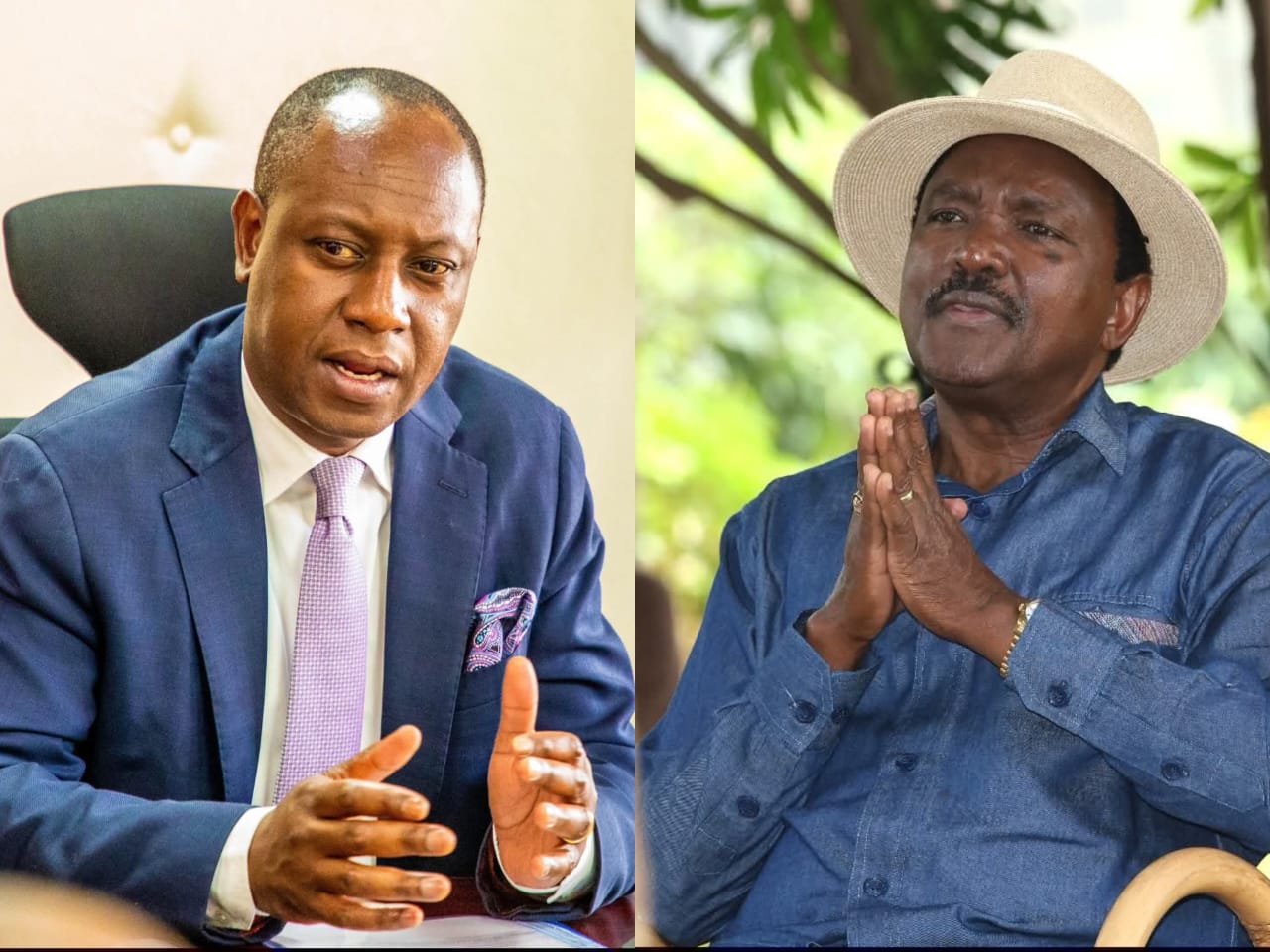
 Former Nairobi Deputy Governor Jonathan Mueke and Wiper leader Kalonzo Musyoka. Photo by Andrew Mbuva.


By Andrew Mbuva
Former Nairobi Deputy Governor Jonathan Mueke has given a detailed account of behind-the-scenes political negotiations that, he says, clearly show Wiper Party leader Kalonzo Musyoka did not politically mentor him, but instead repeatedly preferred other candidates over him for the powerful Nairobi Deputy Governor position.
Speaking on a local Kamba television station in response to claims by Makueni Senator Daniel Maanzo, Mueke said the assertion that Kalonzo nurtured his political career was not only misleading but contradicted by the actual events that preceded the 2013 Nairobi gubernatorial race.
Mueke revealed that when coalition talks between ODM leader Raila Odinga and Kalonzo Musyoka were concluded, it was agreed that ODM would take the Nairobi Governor’s seat while Wiper would nominate the Deputy Governor. However, Kalonzo faced a dilemma: he did not have a Wiper-aligned Kamba leader in Nairobi ready for the position.
As a result, Kalonzo initially preferred Bishop Margaret Wanjiru, despite her being an ODM member at the time. According to Mueke, this move shocked Wiper Party officials and Kamba professionals, who felt sidelined by their party leader.
“Kalonzo’s first choice was Bishop Margaret Wanjiru, not me,” Mueke stated. “He did not have a Wiper candidate in Nairobi, so he opted for someone outside the party.”
Pressure from Wiper leaders and professionals later forced Kalonzo to reconsider, leading to Mueke’s name being proposed after he was deemed politically viable due to his Westlands parliamentary bid and grassroots support in Nairobi. Even then, Mueke said, Kalonzo was unconvinced and only reluctantly included him after sustained lobbying.
But this support was short-lived.
Barely two weeks into the campaign, Kalonzo once again dropped Mueke’s name, this time bowing to fresh coalition calculations. Raila Odinga persuaded Kalonzo that Nairobi needed a Luhya Deputy Governor because Musalia Mudavadi was also contesting the presidency. Kalonzo readily agreed and replaced Mueke with former Nairobi Town Clerk Philip Khisia.
“There were intense talks and protests from Wiper leaders and Kamba professionals,” Mueke said. “But Kalonzo stood firm. He insisted the position would go to Philip Khisia.”
Mueke emphasized that at this stage, Kalonzo had completely ruled him out, making it clear that he did not see him as the preferred choice for the role. The decision only changed at the very last moment — not because of Kalonzo, but due to Governor Evans Kidero’s personal intervention.
On the final day of nominations, Kidero contacted Mueke directly and insisted on having him as his deputy, asserting his constitutional right to choose his running mate.
“I told Governor Kidero that Kalonzo had rejected me,” Mueke recalled. “He said plainly that he could not work with Philip Khisia and that I was his choice.”
According to Mueke, both Kalonzo and Raila only learned of Kidero’s final decision when they saw the nomination aired on television — a clear indication that Kalonzo neither sponsored nor endorsed his appointment.
Ironically, Mueke became the first Kamba Deputy Governor of Nairobi despite facing resistance from his own community’s top political leadership. Nevertheless, he maintained that he bears no personal grudge against Kalonzo Musyoka.
“I served in the Wiper National Executive Council and attended Wiper summits during my tenure,” he said. “We coordinated well, but the facts must be told as they are.”
Mueke said his clarification was necessary to counter growing attempts to rewrite political history and wrongly attribute his rise to mentorship that, by his account, never existed