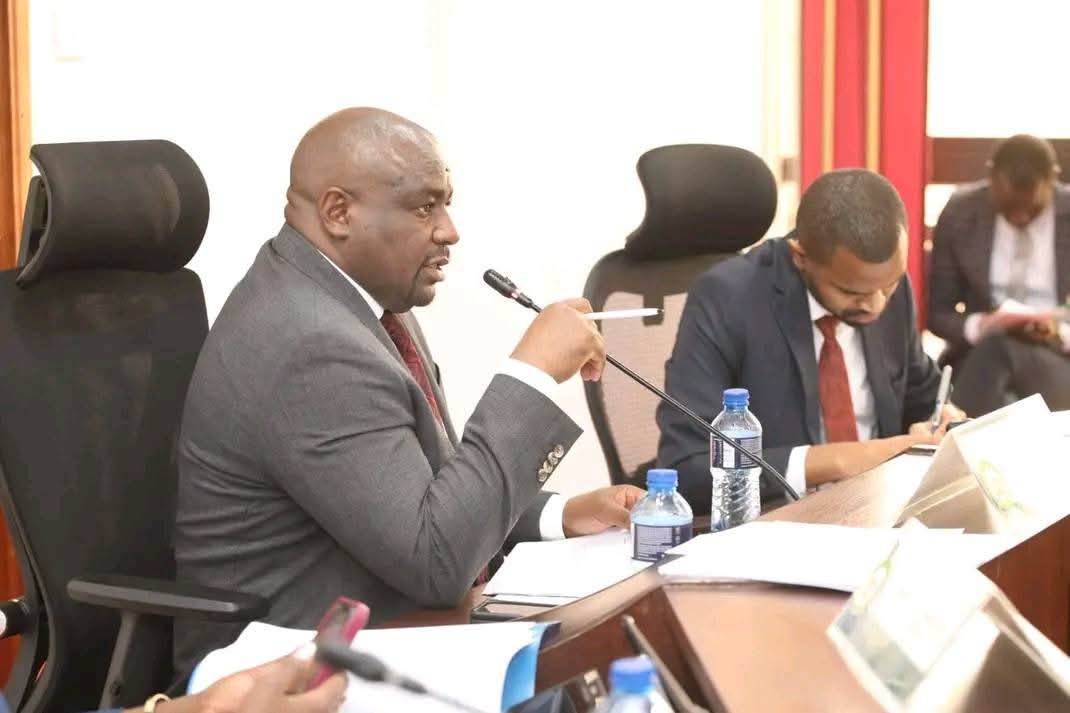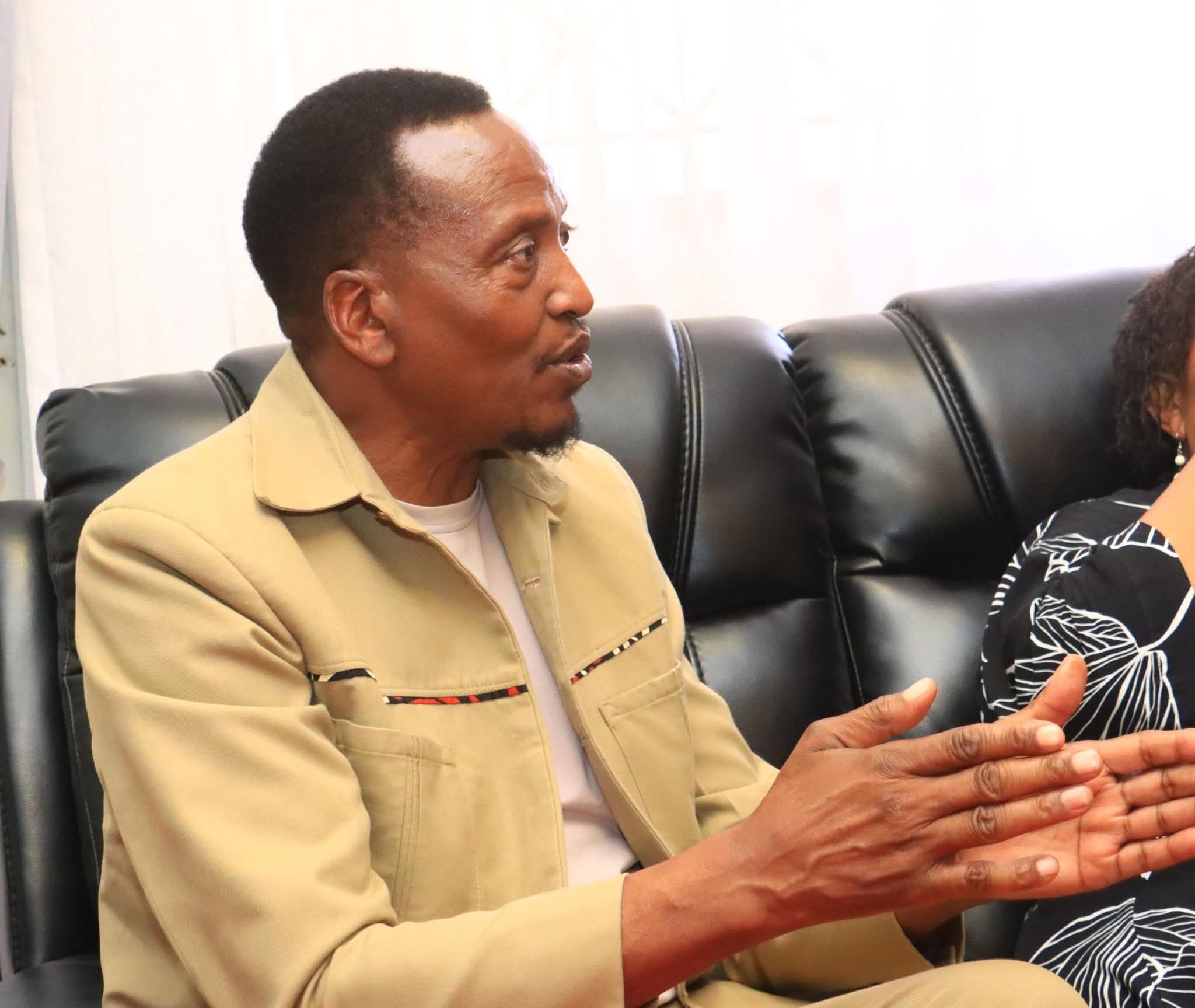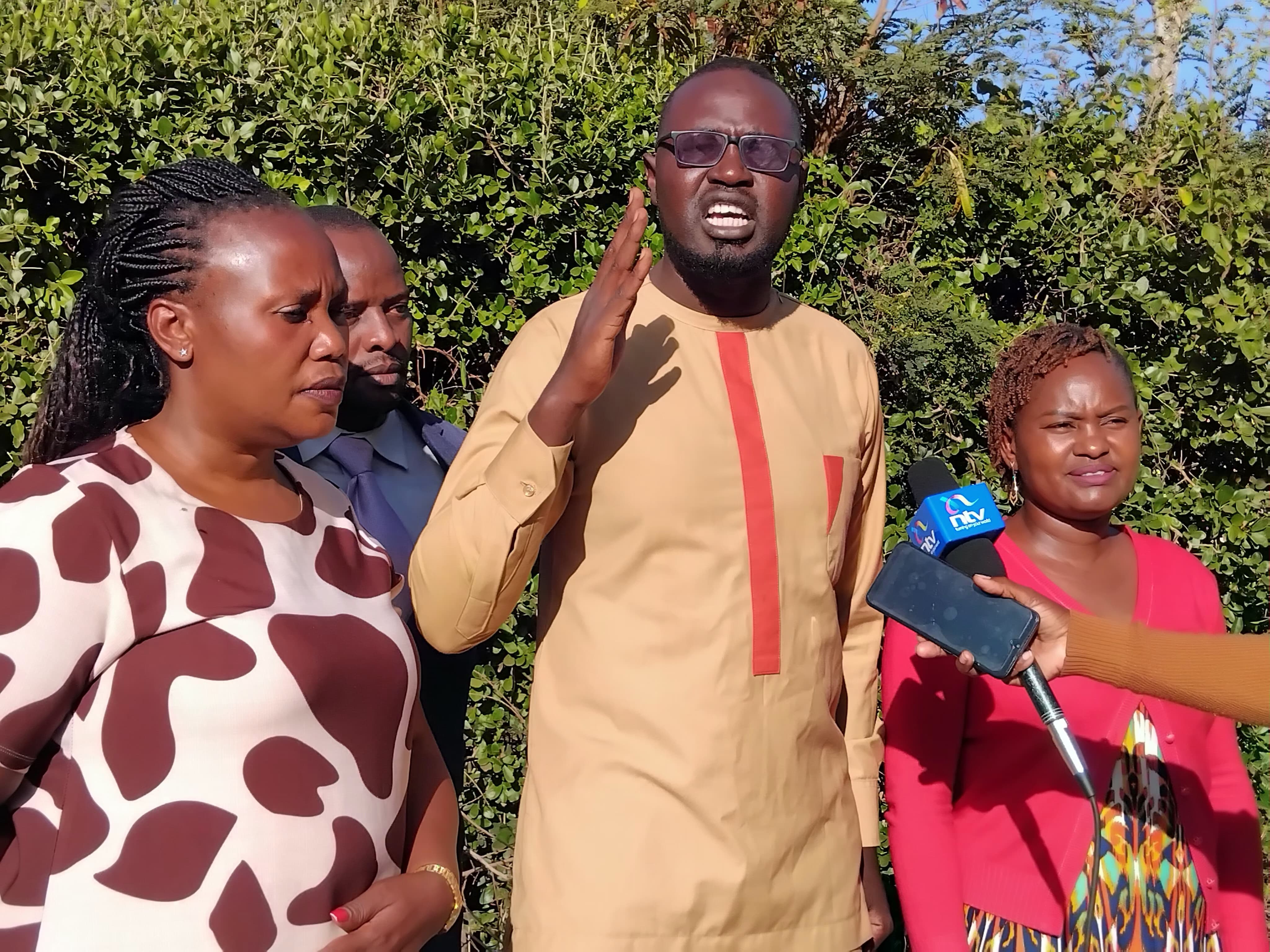
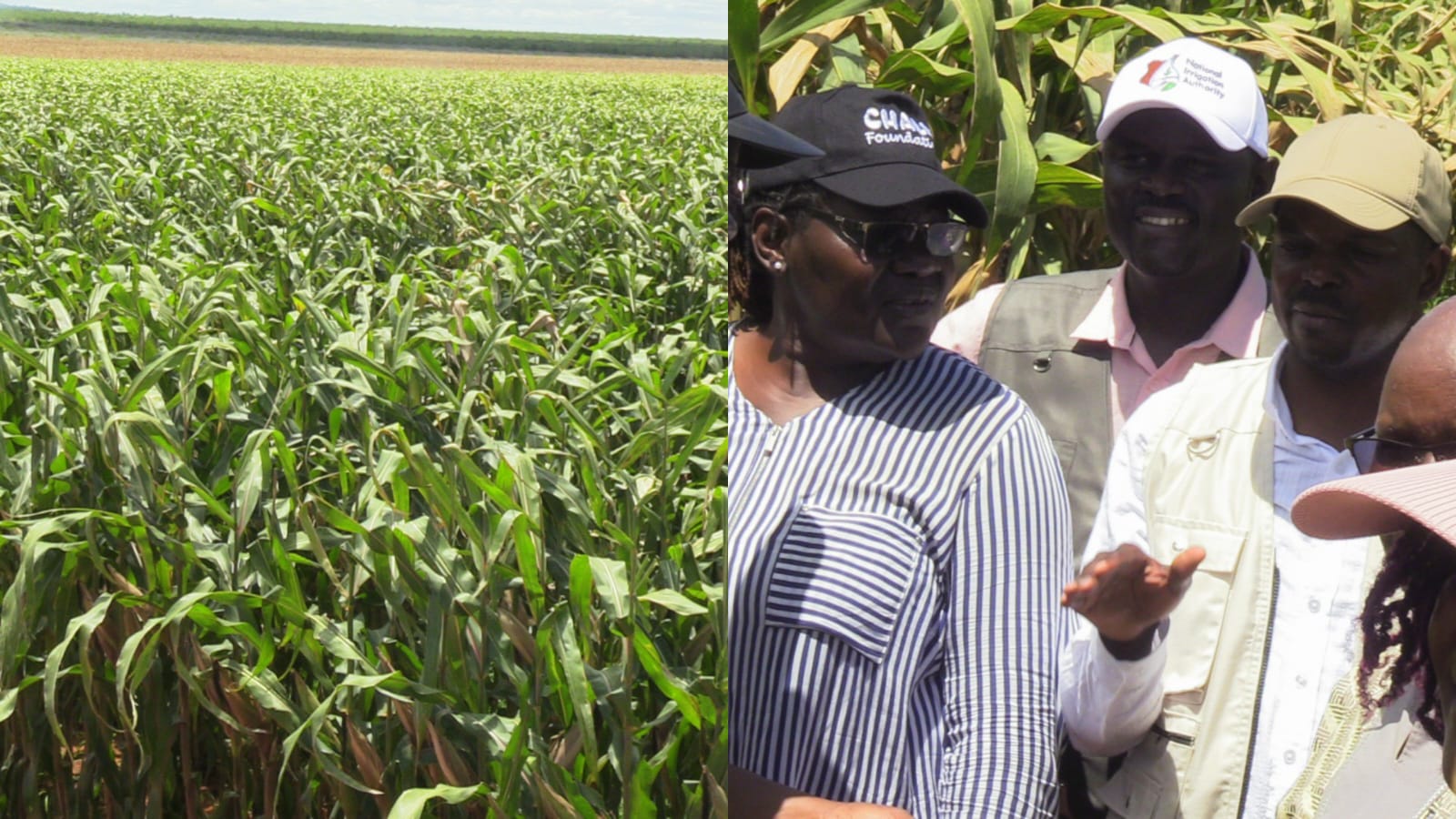
 The Chief Executive Officer (CEO) Selu Limited Nicholas Amanya explain to the head of Government Delivery Unit (GDU) Olando Sitati irrigation progress at the firm’s 20,000 acre model farm at the Galana Kulalu Irrigation and Food Security project in Kilifi County on April 22, 2026. Photo by Ben Okweingoti


By Ben Okweingoti.
The Galana Kulalu Food Security Project in Kilifi and Tana River counties is steadily transforming into a key driver of agribusiness and rural employment, marking a significant turnaround for a venture that has long struggled to meet expectations.
Over a decade since its launch in 2013, the project is now supporting more than 5,000 direct and indirect jobs, as the government pushes to complete a 20,000-acre pilot phase aimed at demonstrating its viability.
For years, the project symbolized stalled ambition, weighed down by corruption allegations, unreliable water supply, persistent drought, and a lack of critical infrastructure such as roads, bridges, and electricity. These challenges discouraged investors and slowed progress.
However, a renewed wave of government investment is beginning to reverse this trend. Billions of shillings have been directed toward building essential infrastructure, creating an enabling environment that is gradually attracting private sector participation through Public-Private Partnerships.
Selu Limited, one of the firms operating within the project, holds 40,500 acres but has so far developed less than 4,000 due to earlier constraints. The company has now embarked on a 20,000-acre pilot focusing on seed maize production to reduce Kenya’s reliance on imports.
According to its Chief Executive Officer, Nicholas Amanya, initial feasibility studies identified energy, water access, and logistics as the primary bottlenecks. Currently, the firm relies heavily on diesel, consuming about 5,000 litres daily to power irrigation systems—an approach that is both costly and unsustainable. The ongoing electrification project is expected to significantly lower these costs and improve efficiency.
Water access remains another major limitation. At present, irrigation depends largely on river abstraction, restricting cultivation to approximately 6,300 acres. Plans to construct a mega dam within Tsavo National Park, with the capacity to hold up to 306 million cubic meters of water, are expected to expand irrigation and enable the project to reach its full potential. Meanwhile, the near-completion of the Galana Bridge is set to ease transportation challenges that have long hindered the movement of farm inputs and produce.
Selu currently employs about 700 workers daily, a number expected to rise as operations expand. Another major investor, Nyumba Foundation, a subsidiary of Mombasa Cement, has secured 52,000 acres and is developing its own infrastructure, including a 50-kilometre gravity-fed canal from River Galana, 14 dams, and solar-powered systems. The foundation has already created more than 3,000 direct jobs, further underscoring the project’s growing economic impact.
The revival of Galana Kulalu is closely tied to ongoing infrastructure development. The Sh2.9 billion electrification project, now about 40 percent complete, is expected to provide reliable power and eliminate dependence on diesel. At the same time, the Sh1.49 billion Galana Bridge is over 97 percent complete and will greatly improve connectivity. Additional road networks linking the area to Malindi, Mombasa, and Nairobi are also underway, promising to reduce transportation costs and enhance access to markets.
Despite this progress, challenges remain. A recent inspection by a multi-agency government team revealed delays in some projects, particularly electrification. Contractors have been urged to accelerate their work, with authorities warning that no further extensions will be granted. The government is also working to coordinate various agencies and attract new investors, with plans to open up an additional 100,000 acres on the Tana River side.
The project’s current momentum comes against the backdrop of a troubled past. Originally envisioned as a Sh400 billion, one-million-acre irrigation scheme, Galana Kulalu fell far short of its goals. Early trials, including those by the Israeli firm Green Arava, recorded dismal yields, with maize production as low as six to ten bags per acre.
Financial irregularities further undermined confidence, and by 2018, the firm had exited the project citing non-payment. Subsequent interventions, including a Sh797 million contract awarded in 2020 to complete the model farm, have struggled to fully revive the initiative.
Even now, production remains below expectations. While earlier projections estimated seasonal maize sales of Sh1.2 billion, the project has so far produced about 119,000 bags valued at approximately Sh273.7 million.
Nonetheless, Galana Kulalu appears to be at a turning point. With infrastructure nearing completion, investor confidence returning, and employment steadily increasing, the project is beginning to reflect its original vision.
Its long-term success will depend on sustained government commitment, efficient management, and the ability to convert infrastructure gains into consistent agricultural output. For now, it stands as a story of resilience, offering cautious optimism for Kenya’s food security ambitions.