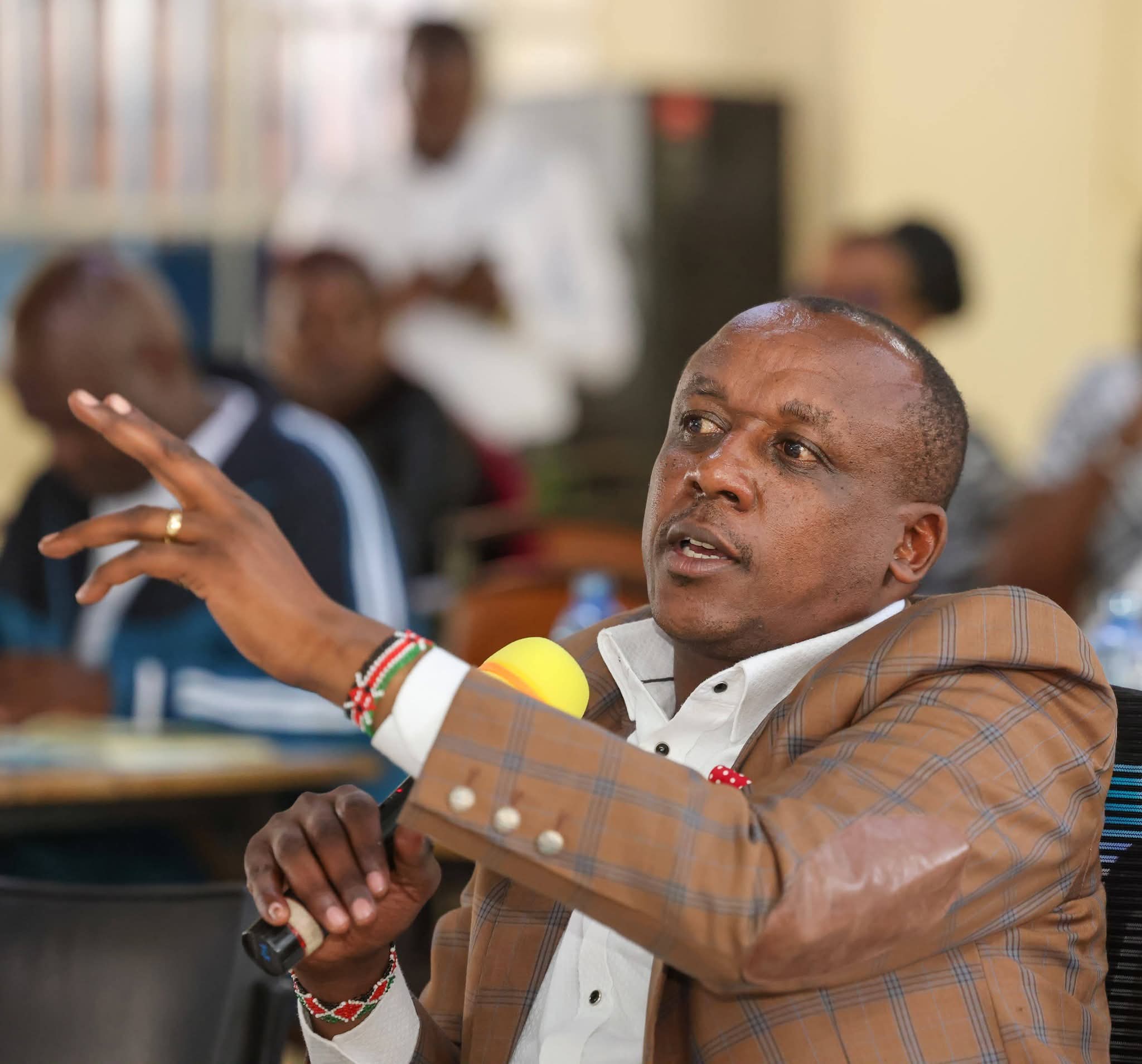
 Makueni Governor Mutula Kilonzo Jnr Speaking during a stakeholders’ forum convened by the Independent Electoral and Boundaries Commission (IEBC) at Wote Technical Training Institute on April 2, 2026. Photo by Gvrns Press.


By Andrew Mbuva.
A fresh storm is brewing over Kenya’s electoral credibility after Makueni Governor Mutula Kilonzo Jnr intensified calls for an urgent audit of both the voters’ register and the electoral system, warning that failure to act could erode public trust in future elections.
Speaking during a stakeholders’ forum convened by the Independent Electoral and Boundaries Commission (IEBC) at Wote Technical Training Institute, the Governor expressed dissatisfaction that key electoral reforms promised after the 2022 General Election remain unimplemented.
Mutula pointedly noted that despite legal and public expectations, the country has yet to conduct a comprehensive audit of the voters’ register and the electronic voting system—two processes he described as critical to restoring confidence in Kenya’s democracy.
He cited serious system failures during past elections, revealing that nearly 60 percent of voting machines in Kibwezi West Constituency malfunctioned, raising questions about the integrity and reliability of the electoral infrastructure.
“Voter registration, voting, and the results themselves are the backbone of democracy. Without a credible system, Kenyans will continue to doubt whether their votes truly count,” he said.
The Governor further criticized delays in the announcement of presidential results, terming it “unacceptable” for a country that prides itself on digital advancement. He argued that results should be declared within two to three hours after polls close to minimize anxiety, speculation, and potential unrest.
His remarks come at a time when the IEBC has rolled out the Enhanced Continuous Voter Registration (ECVR) exercise, aimed at increasing the number of registered voters ahead of upcoming polls.
Makueni County Assembly Speaker Douglas Mbilu, however, shifted focus to logistical barriers facing potential voters, particularly the youth. He lamented that many young people are unable to register due to transport challenges, accusing the national government and Parliament of failing to allocate sufficient funds to support decentralized registration.
Mbilu argued that voter registration should be brought closer to the people, ideally at polling stations or sub-locations, to guarantee every Kenyan their constitutional right to vote.
“Many youths are walking long distances without fare just to register. This is a failure of planning at the national level,” he said, urging increased funding to enable IEBC outreach at the grassroots.
Despite the challenges, IEBC Makueni County Election Manager Morris Laria reported steady progress in the ongoing exercise. He revealed that over 4,000 voters had already been registered within the first three days, out of a county target of 54,000.
Laria emphasized the importance of stakeholder engagement in boosting turnout, noting that the commission is working closely with community groups, civil society, and government programs such as Huduma Mashinani to mobilize residents.
“We are holding a series of forums targeting different groups including youth, women, and persons with disabilities to ensure inclusivity in the registration process,” he said.
Even as IEBC pushes forward with registration, the spotlight now firmly rests on the broader electoral system, with leaders warning that without transparency and accountability, voter turnout alone will not guarantee credible elections.
For many observers, Mutula’s call for an audit signals a growing demand for electoral reforms—one that could shape the national conversation as the country prepares for its next democratic test.