
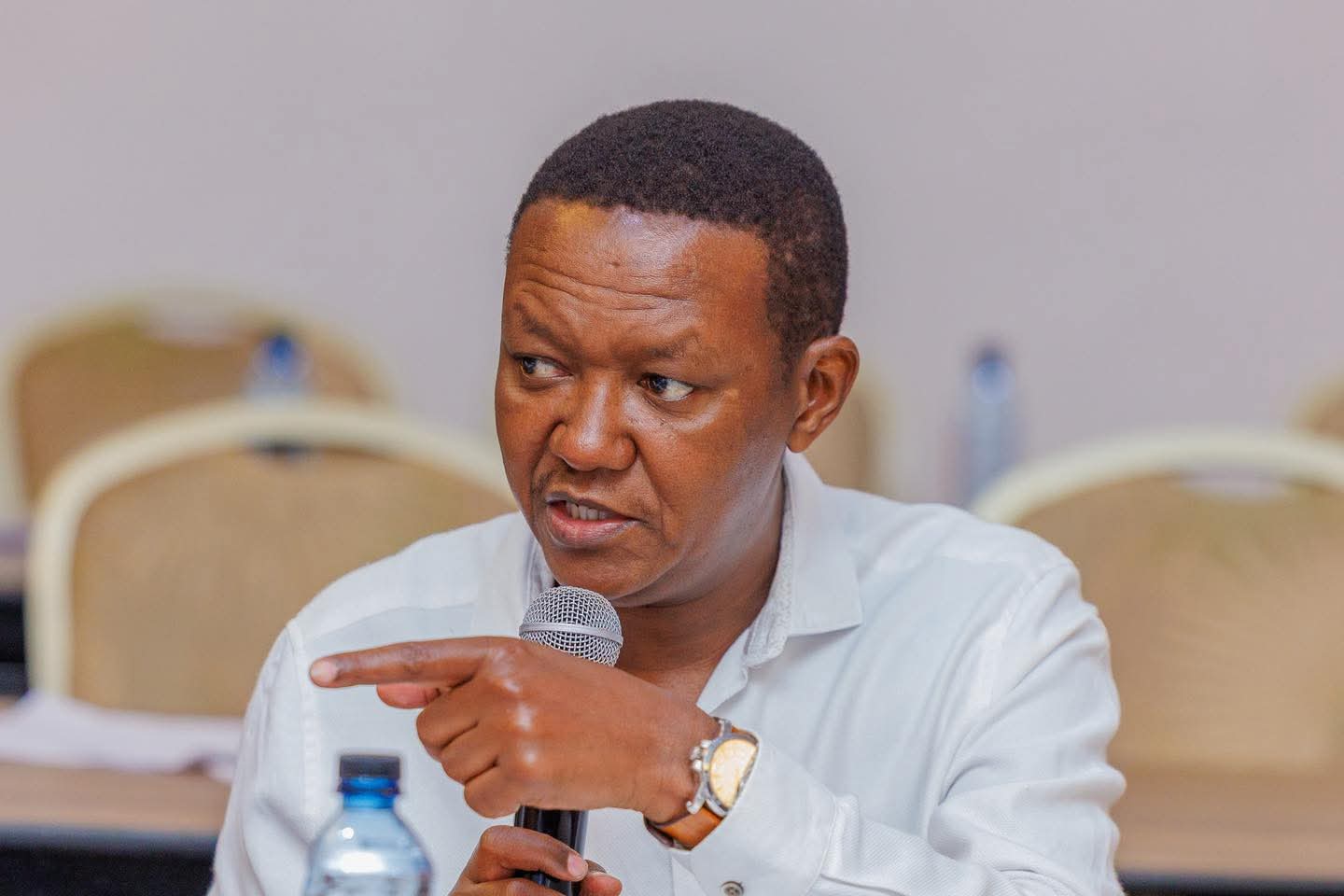
 Labour Cabinet Secretary and Maendeleo Chap Chap Party leader, Dr. Alfred Mutua in a Past Function. File Photo.


By Stanley Mumo.
Labour Cabinet Secretary and Maendeleo Chap Chap Party leader, Dr. Alfred Mutua, yesterday cautioned against rushing political decisions, emphasizing that the future of the Kamba community is not for sale.
Speaking during a Public Participation forum in Masii, Mutua addressed ongoing negotiations between Maendeleo Chap Chap and the ruling United Democratic Alliance (UDA) following a recent meeting between some party leaders and President William Ruto.
He singled out Kibwezi West MP Mwengi Mutuse and Machakos Town MP Caleb Mule, who had led elected MCAs from Machakos, Kitui, and Makueni to State House, announcing plans to deepen cooperation with UDA.
“I have not accepted, nor have I refused any proposal,” Mutua said. “The decision does not belong to me alone – it belongs to you, my people. Our community is not for sale. Anyone approaching us must do so with respect, a clear plan, and a vision for the future of our people, not for personal interests.”
Mutua drew on Kamba cultural values to underscore his point, noting that decisions should be made with dignity and patience, rather than rushing into commitments. He urged party members to exercise caution and resist hasty political alignments.
Reflecting on his political journey, Mutua recounted how he broke away from the Wiper Party after facing marginalization and formed Maendeleo Chap Chap. Despite being mocked as a “rabbit” and a “cinema governor,” he highlighted tangible achievements under his leadership, including the construction of People’s Park, stadiums, roads, and boreholes, which he said continue to benefit the community.
The Labour CS, reportedly eyeing the Machakos Senate seat in 2027, announced plans to consult the public across Machakos, Kitui, and Makueni counties before making a final decision on whether to dissolve Maendeleo Chap Chap and join UDA.
Mutuse and Mule have so far defended their State House engagement, citing the need to harmonize party efforts and minimize negative competition. They argued that collaboration with UDA could accelerate development and improve social and economic outcomes for their constituents.
Mutua’s remarks signal a careful balancing act between preserving his party’s independence and navigating the potential benefits of aligning with the ruling party, placing the ultimate decision in the hands of the Kamba electorate.