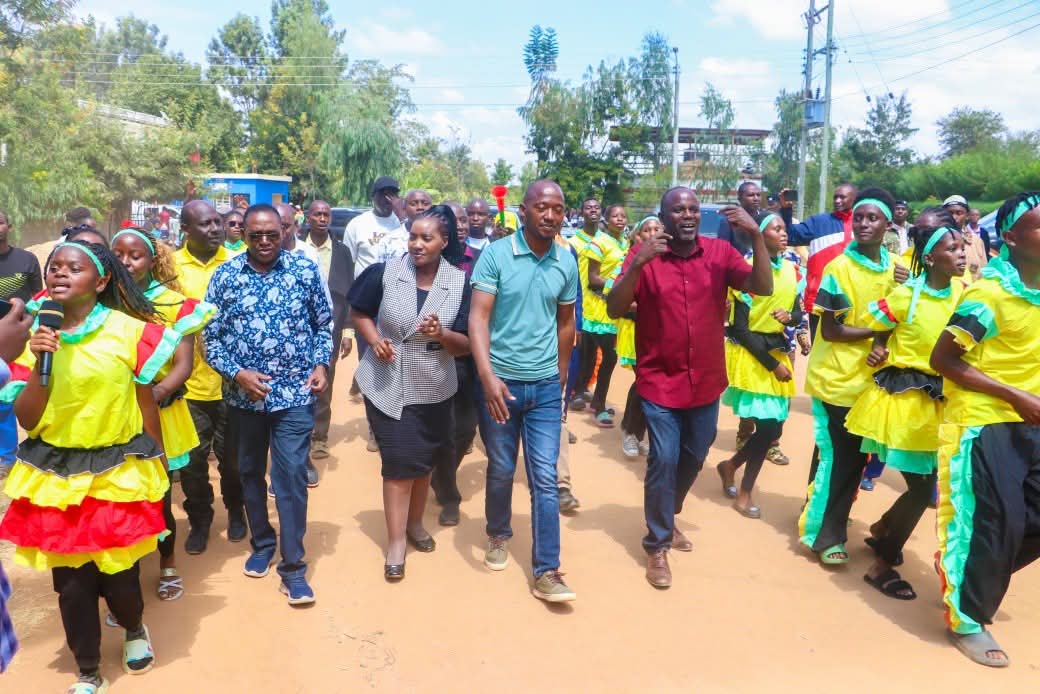
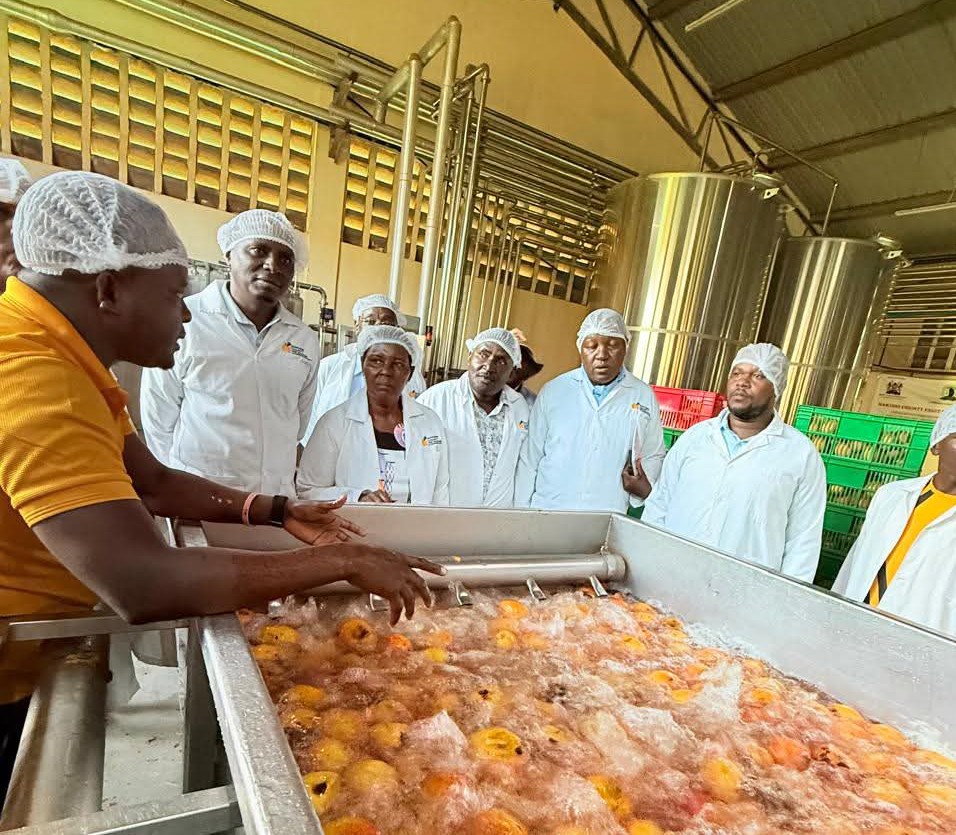
 Makueni Assembly Agriculture Committee during a visit at Kalamba Fruit Processing Plant. File Photo.


By Andrew Mbuva.
The Makueni County Assembly rejected a report by its Agriculture Committee on the purchase of mangoes by the Makueni Fruit Processing Plant (MFPP), citing major gaps that failed to explain the heavy losses suffered by farmers across the county.
During a heated plenary sitting on Tuesday, Members of the County Assembly (MCAs) said the report did not reflect the true situation on the ground and overlooked critical procurement and operational failures that denied many farmers access to the market.
Deputy Leader of the Minority Party, Hon. Jackson Kimunyi, led the opposition, faulting the report for failing to address farmers’ complaints and for lacking transparency in cooperative operations.
“I stand to oppose this report because it did not address the issues our farmers in Makueni were crying for,” said Kimunyi.
He questioned why contracts between the processing plant and cooperatives were not tabled before the Assembly, saying this made it difficult to determine whether the cooperatives fulfilled their mandate.
“From the information we received, some cooperatives were buying mangoes from their members only. We were not shown any contract to confirm whether that was the agreement,” he said.
Kimunyi further alleged that some cooperatives failed to collect mangoes directly from farms as required, instead asking farmers to transport their produce to Kalamba.
“That was not the spirit of their contract. The cooperatives were supposed to go to the farmers, buy mangoes at Sh19 per kilogram and deliver them to the plant,” he added.
He also raised concerns over possible falsification of procurement records, claiming that some forms contained names of farmers who could not be traced.
“When you scrutinize the forms, you will find some of the farmers listed do not exist. Agricultural officers who signed those forms must be held accountable,” he said.
MCAs also opposed the report for failing to address inequality in mango purchases across wards. Legislators argued that most cooperatives concentrated around areas close to the factory, leaving farmers in distant regions without access to the market.
Wote MCA Hon. Felix Mateso said the report ignored the severe losses experienced by farmers, even in wards located near the processing plant.
“For the purposes of my farmers and as a farmer myself, I oppose this report. This year was one of the worst seasons in terms of losses,” said Mateso.
He revealed that the cooperative assigned to purchase mangoes in his ward was largely inactive, leaving farmers stranded with unsold produce.
“It is surprising that despite being close to the factory, our farmers suffered huge losses because the cooperative mandated to buy mangoes was not active,” he said.
Mateso also questioned why pack houses and private processors that previously supported farmers did not participate in the latest procurement exercise.
“We need an independent investigation to establish why processors did not come to buy mangoes and why only a few wards benefited,” he added.
Following the rejection of the report, Speaker Douglas Mbilu David directed the Public Accounts Committee (PAC) and the Public Investments Committee (PIC) to conduct a fresh forensic investigation into procurement and management at the processing plant.
Speaking after the plenary, Majority Leader Hon. Kisungi Wa Katete said the Assembly acted after listening to residents’ concerns.
“We have heard the voices of the people of Makueni regarding the mango issue and we deeply sympathize with farmers who suffered post-harvest losses,” said Kisungi.
He welcomed the suspension of the plant’s Chief Executive Officer and transfer of the Chief Officer in charge of the department but insisted that further accountability measures were necessary.
“If anyone subjected the people of Makueni to injustice in the purchase of mangoes, such individuals must be identified and the law must take its course,” he said.
The joint oversight committees are expected to table a comprehensive report by February 16, 2026, as the Assembly seeks lasting solutions to restore confidence in the processing plant and protect farmers’ livelihoods.