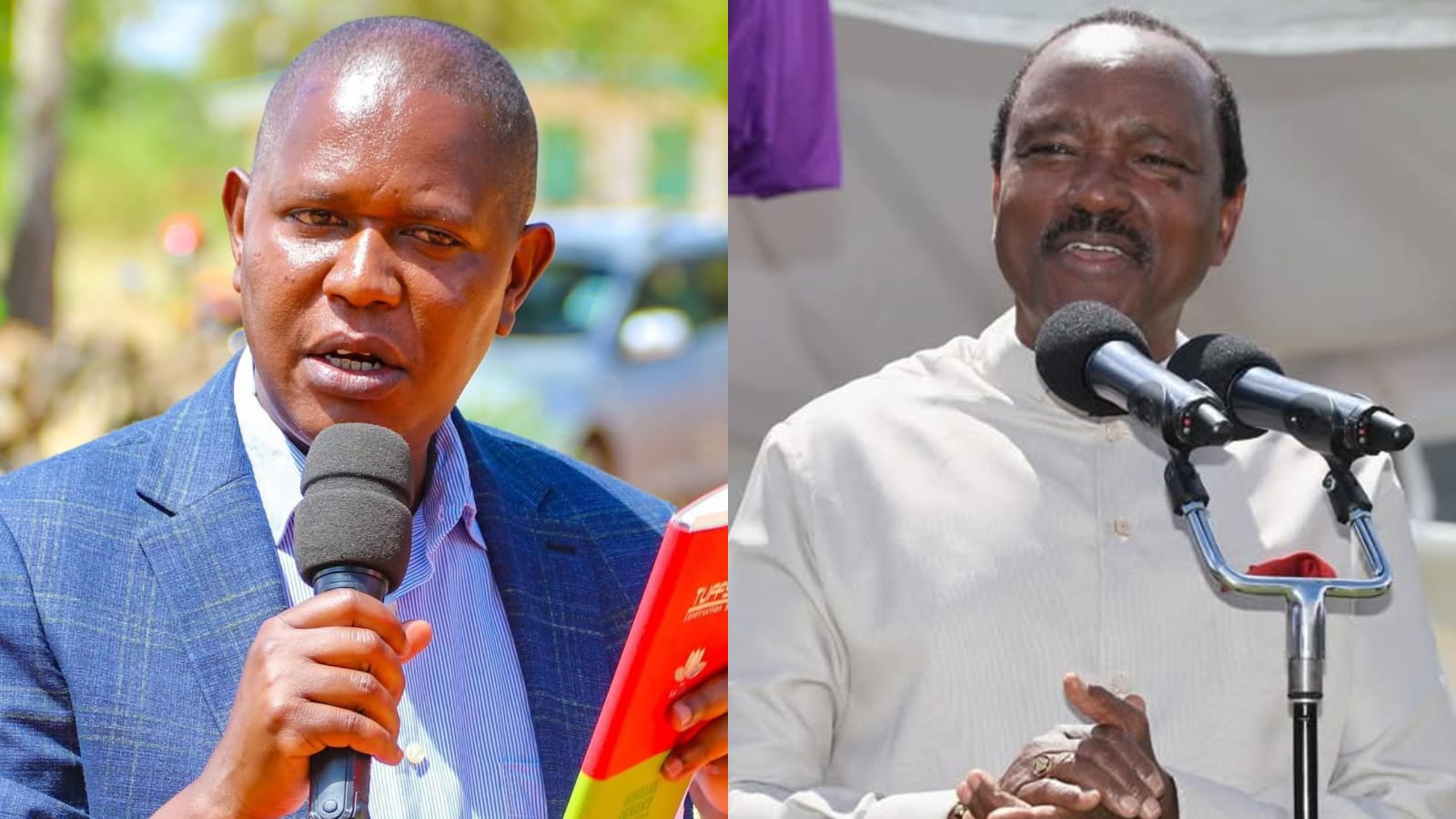
 Kibwezi West MP Mwengi Mutuse and Wiper leader Kalonzo Musyoka. Photo by Andrew Mbuva.


By Andrew Mbuva
Kibwezi West MP Mwengi Mutuse has lifted the lid on behind-the-scenes political manoeuvres surrounding the 2022 General Election, revealing how he unsuccessfully tried to convince Wiper Party leader Kalonzo Musyoka to work with President William Ruto immediately after the vote in order to secure government positions for his allies.
Speaking candidly, Mutuse narrated a detailed account of pre-election intrigues, discreet negotiations and strategic political calculations that, he says, shaped his own path and influenced key political realignments ahead of and after the August 2022 polls.
According to Mutuse, his engagement with Ruto began as early as March or April 2022, months before Kenyans went to the ballot. While attending a burial ceremony, he received a call from Ruto, who was then Deputy President and preparing to travel to the United States.
“He told me he was confident I would win the Kibwezi West parliamentary seat and that he too would win the presidency,” Mutuse said, adding that Ruto expressed a desire for them to work together politically.
Ruto, Mutuse recalls, advised him to quietly coordinate with then-Senators Kipchumba Murkomen and Irungu Kang’ata — leaders they had schooled with — and to stop “wasting time” with veteran opposition figures Raila Odinga and Kalonzo Musyoka. Out of respect for the office Ruto held at the time, Mutuse says he listened, even though they were in opposing political camps.
After Ruto’s return from the US, a meeting involving Mutuse, Murkomen and Kang’ata took place. It was during this engagement that Ruto proposed a tactical political arrangement: Mutuse would remain in the Azimio coalition to protect his parliamentary bid, while Dr Alfred Mutua — who was not seeking elective office — would be encouraged to formally join Ruto’s Kenya Kwanza camp.
Mutuse says he executed the plan. He reached out to Mutua, ensured a formal deal was signed, and returned to focus on his Kibwezi West campaign, effectively “hunting on both sides” — a strategy he describes as the mark of a “wise hunter” in uncertain political terrain.
Even as campaigns intensified, Mutuse maintained his Azimio posture on the ground, at times openly attacking Ruto on the campaign trail. He recalls an incident in Ngumu where his criticism drew a light-hearted rebuke from Ruto later that night.
“He told me, ‘Muugwana si unichape pole pole, si tulikubaliana,’” Mutuse said, adding that the exchange reaffirmed the quiet understanding between them.
Following the election, with the outcome still unclear, Ruto contacted Mutuse to ask whether their earlier agreement still stood. Mutuse confirmed it did and travelled to Nairobi. Before meeting Ruto, however, he paid courtesy calls to key Azimio figures — interactions that convinced him the opposition camp was in disarray.
He says then-President Uhuru Kenyatta appeared unsure of the unfolding situation, while Junet Mohamed urged patience, telling him “things were being worked out.” For Mutuse, this uncertainty was a red flag.
It was at this point that he made a decisive move to approach Kalonzo Musyoka at his Karen residence — for the second time in a week. Mutuse says he bluntly advised Kalonzo to move swiftly and engage Ruto.
“I told him he was not on the ballot and not even the running mate, so he had nothing to lose,” Mutuse recounted. He warned that Raila Odinga would likely find his way into government within a year and urged Kalonzo to get ahead of that curve to secure positions for his people.
Kalonzo, Mutuse says, acknowledged that Ruto had reached out to him through emissaries but opted for caution, repeatedly saying, “Let’s wait and see.”
When it became clear to him that Kalonzo was undecided, Mutuse informed him of his own decision to work with Ruto. He insists this was not an act of betrayal, noting that he was not a Wiper MP and that Wiper had fielded its own candidate against him in Kibwezi West.
“I consulted him purely out of respect,” Mutuse said.
From Kalonzo’s home, Mutuse drove straight to Ruto’s Karen residence, where he publicly signalled his political shift by taking a photo with the President-elect — a move that sparked widespread backlash on social media.
“I knew exactly what I was doing,” he said, defending his actions. “A good leader leads his people from the front and from behind.”
Mutuse’s revelations offer a rare glimpse into the high-stakes calculations and silent negotiations that defined Kenya’s 2022 political transition — and how, in his telling, a missed moment by Kalonzo Musyoka altered the balance of power in the post-election order.