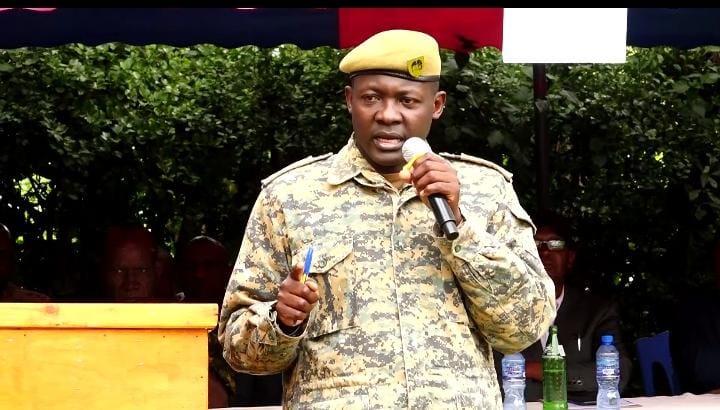
 Oldonyo Sabuk National Park Chief Warden Ogutu Kisera Speaking during the Annual General Meeting of the Muka Mukuu Cooperative Society held at Kianzabe on December 17, 2025. Photo by Ryan Mumo.


By Ryan Mumo
Residents living near Oldonyo Sabuk National Park have been warned against using water points and grazing livestock inside the protected area due to the risk of deadly diseases transmitted from wildlife to animals and humans.
Speaking during the Annual General Meeting of the Muka Mukuu Cooperative Society held at Kianzabe, Oldonyo Sabuk National Park Chief Warden Ogutu Kisera cautioned that close interaction between wildlife and livestock exposes communities to serious zoonotic diseases, some of which can result in death.
Kisera further warned that grazing inside the park not only endangers human life but also violates conservation laws. He raised concern over increasing cases of illegal activities, revealing that unknown individuals recently sneaked into the park’s guest house and made away with furniture and other valuables. He said investigations into the incident are ongoing.
The Chief Warden also cautioned residents against constructing houses close to the park fence, noting that a three-metre road reserve had been left to allow for future road expansion. However, some residents had encroached into the reserve, which he clarified is part of the national park, thereby turning themselves into intruders.
His sentiments were echoed by Dominic Nthwao, the Chairman of Muka Mukuu Cooperative Society, who urged members living near the park to take the warnings seriously. Nthwao cautioned that wildlife poses a real threat to both livestock and human life, particularly when residents slaughter animals exposed to wildlife diseases and consume the meat.
Addressing more than 1,500 cooperative members at the meeting, Nthwao also advised those embroiled in land disputes to consider alternative dispute resolution mechanisms instead of prolonged court battles, which he said drain finances through legal fees and waste valuable time.
On the issue of human-wildlife conflict compensation, Nthwao called on the government and the Kenya Wildlife Service (KWS) to fast-track compensation for victims who have been injured, maimed, or killed by wild animals. He noted that many cases have remained unresolved for years, despite some incidents resulting in multiple deaths or permanent disabilities.
The leaders emphasized the need for cooperation between residents, conservation authorities, and the government to safeguard lives, protect livelihoods, and preserve the integrity of Oldonyo Sabuk National Park.