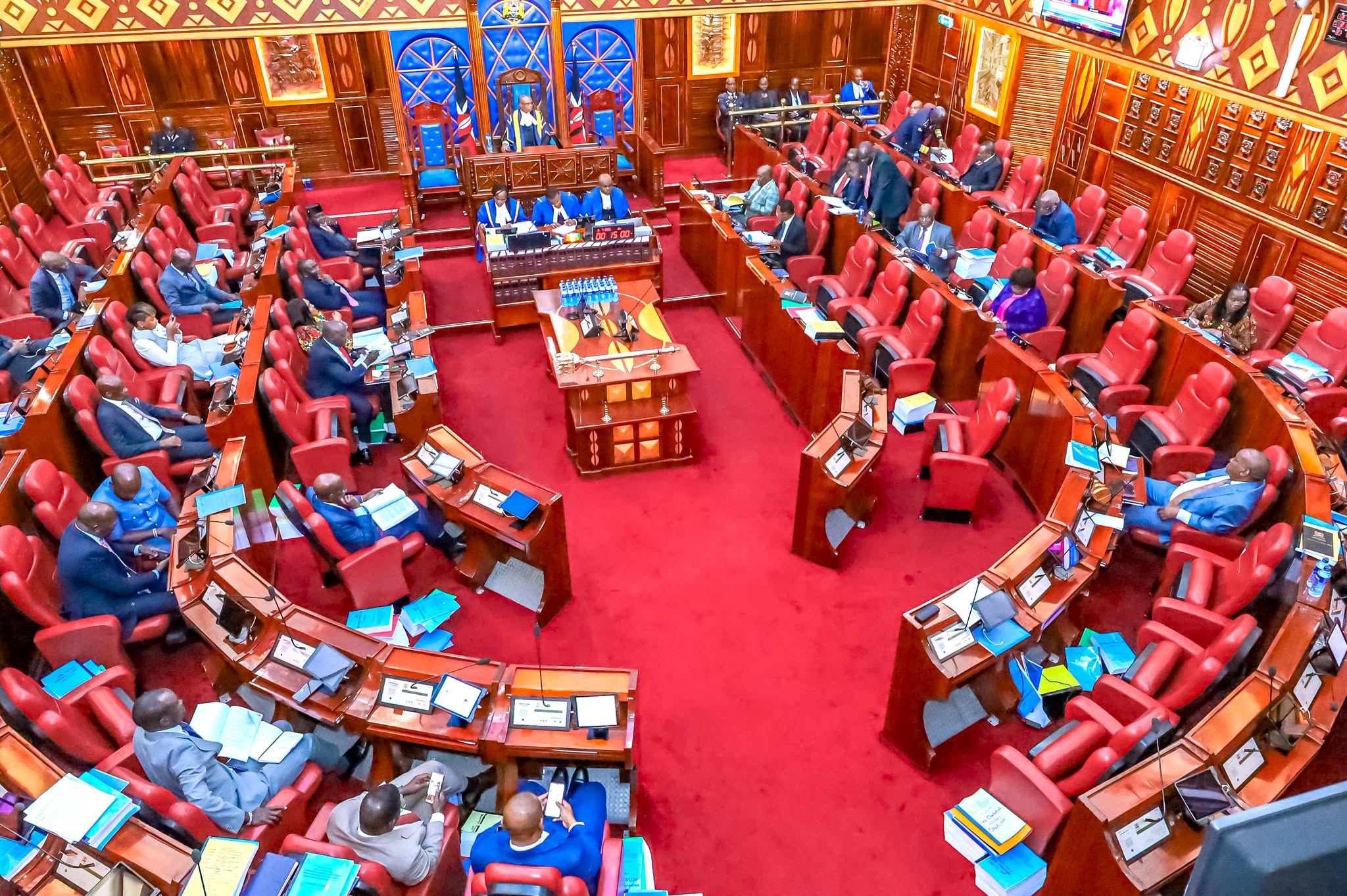
 Senate Speaker Amason Kingi leads senators during a parliamentary session. The Senate is set to hold its sittings in Kilifi County from September 21 to 25, 2026, as part of efforts to bring parliamentary activities closer to citizens.


By Fredrick Kioko,
The Senate will next week relocate its sittings from Nairobi to Kilifi County, where lawmakers will conduct a week-long programme of plenary sessions, committee meetings and public engagements.
The sittings will run from September 21 to 25, 2026, following approval by the Senate on May 5. The move is intended to bring Parliament closer to citizens, giving residents an opportunity to observe and better understand the work of the Senate.
In a message to senators on September 8, Senate Speaker Amason Kingi said preparations for the Kilifi sittings were at an advanced stage. He expressed confidence that the sessions would allow the Senate to discharge its constitutional mandate while strengthening engagement with residents, county leaders and other institutions.
Several Senate committees are expected to conduct oversight visits to projects being implemented by both the national and county governments across Kilifi. The visits will give senators an opportunity to assess projects on the ground and engage residents on challenges affecting their communities.
Beyond parliamentary business, senators will participate in a series of activities aimed at strengthening ties with the local community.
The Kenya Women Senators Association (KEWOSA) is expected to visit the Mtangani Women’s Prison in Malindi. Senators will also engage pupils at Gede Primary School and a special-needs school in Gede.
A football match between the Senate and the Kilifi County Assembly has also been scheduled at Town Malindi High School, while the Senate leadership is expected to hold talks with the leadership of the Kilifi County Assembly at the county assembly chambers in Malindi.
The decision to hold Senate sittings outside Nairobi is anchored in the Constitution. Article 96 outlines the Senate’s role in representing and protecting the interests of counties, while Article 126(1) allows Parliament to hold its sittings at any place within Kenya.
For Kilifi, however, the Senate’s arrival carries significance beyond parliamentary procedure. The county has a deep connection to Kenya’s historical debate over regional power, local representation and the distribution of authority.
Kilifi was the birthplace of the late Ronald Ngala, one of Kenya’s prominent political leaders during the struggle for independence. Ngala, who was born in Gotani, was a leading figure in the Kenya African Democratic Union (KADU), which advocated for a Majimbo system that sought to give greater powers to Kenya’s regions rather than concentrating authority in the central government.
The Majimbo debate of the pre-independence period emerged from a very different political and historical context and was not identical to the devolved system established under the 2010 Constitution. However, it raised questions about regional representation, distribution of resources and the concentration of political power that have continued to shape Kenya’s governance.
The 2010 Constitution introduced devolution through Chapter 11, with county governments beginning operations after the 2013 General Election. The system was designed, among other objectives, to bring government services, resources and decision-making closer to citizens.
Against that backdrop, the Senate’s week-long presence in Kilifi offers an opportunity to connect Kenya’s historical debates about regional power with the country’s modern system of devolution.
Kilifi is the fifth county to host Senate sittings outside Nairobi. The Senate previously held sittings in Uasin Gishu in 2018, Kitui in 2019, Turkana in 2023 and Busia in 2025.
For Kilifi residents, the week presents an opportunity to interact directly with senators, county leaders and government institutions while raising issues affecting their communities.
For the Senate, the programme provides an opportunity to combine legislative work with direct oversight and public engagement—bringing the institution closer to the people and reinforcing the constitutional relationship between the national and county levels of government.