
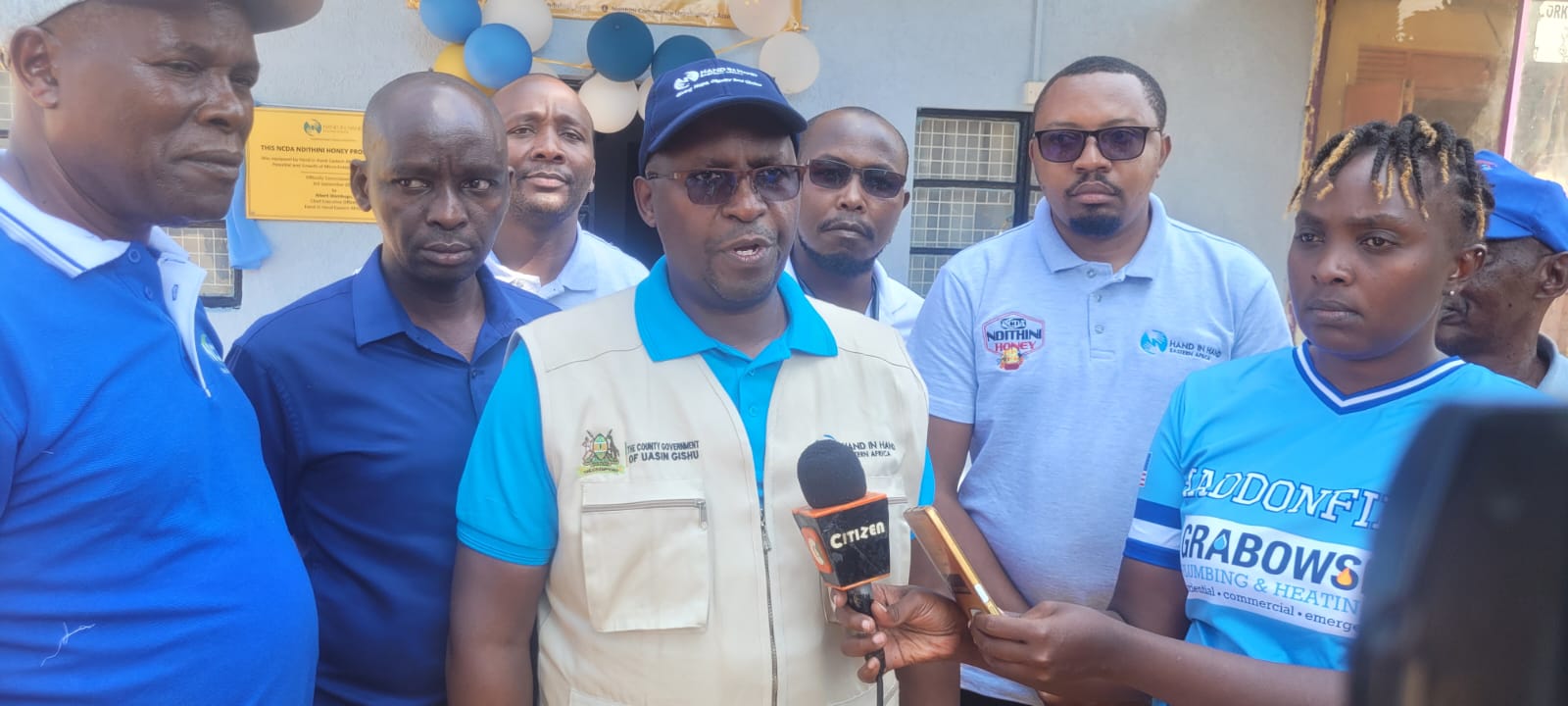
 Ceo Hand in Hand Albert Wambungu addressing Journalists.


By Andrew Mbuva
In the dry plains of Masinga, where prolonged drought has for years threatened livelihoods, a quiet agricultural revolution is giving farmers a new reason to hope.
The Ndithini Community Development Association (NCDA) has launched a honey processing unit, opening a new chapter for hundreds of farmers who are turning beekeeping into a source of income and a pathway out of poverty.
With more than 7,000 members drawn from a constituency of about 48,000 people, NCDA operates under the motto “people empowering people” and runs various initiatives, including agricultural and credit finance programmes.
The honey processing project has now emerged as one of its most promising ventures, attracting more than 400 farmers who collectively manage over 1,300 beehives.
NCDA Chairperson Martin Muoka says the initiative has the potential to transform the local economy, but farmers continue to face major challenges, particularly water shortages and poor road infrastructure.
Muoka notes that Masinga remains the only sub-county in the region without a tarmacked road, a situation he says leaves farmers vulnerable to middlemen who purchase their produce at low prices due to the high cost of transportation.
Despite the challenges, farmers are increasingly embracing beekeeping as a climate-resilient enterprise.
For farmer Lucy Kitetu, the venture has become a lifeline. In just three years, she has harvested 25 kilogrammes of honey, describing beekeeping as a lucrative business that more women should consider.
At the NCDA honey processing plant, Alexander Nzomo is among those overseeing the production and packaging of the locally produced honey.
Nzomo says farmers who embraced the project early are already beginning to see the rewards of their investment, with technical and equipment support from Hand in Hand Eastern Africa helping to strengthen the value chain.
The success has also renewed confidence among farmers who have experienced the unpredictability of agriculture in the drought-prone area.
Francis Kitetu remembers 2025 as a disappointing year after his hives failed to deliver the expected harvest. This year, however, his three beehives produced 11.5 kilogrammes of honey, which he sold at KSh540 per kilogramme.
For Kitetu, the improved harvest is a demonstration that beekeeping can offer farmers reliable returns when given time, investment and proper support.
Hand in Hand Eastern Africa Chief Executive Officer Albert Wambugu has urged more young people to consider agriculture, particularly enterprises such as beekeeping that require relatively little land and can withstand some of the effects of climate change.
Wambugu says Kenya has an estimated honey deficit of about 80,000 metric tonnes, presenting a significant opportunity for farmers and entrepreneurs to expand production and tap into the growing market.
He says strengthening community-based enterprises can also improve the quality and traceability of honey while creating sustainable businesses and employment opportunities.
For Masinga farmers, the honey project is more than an agricultural venture. It represents a shift from simply surviving the region's harsh climate to building businesses around it.
As thousands of bees buzz around hives scattered across the dry landscape, farmers are hoping that their new sweet harvest will bring something long missing from Masinga — sustainable prosperity.