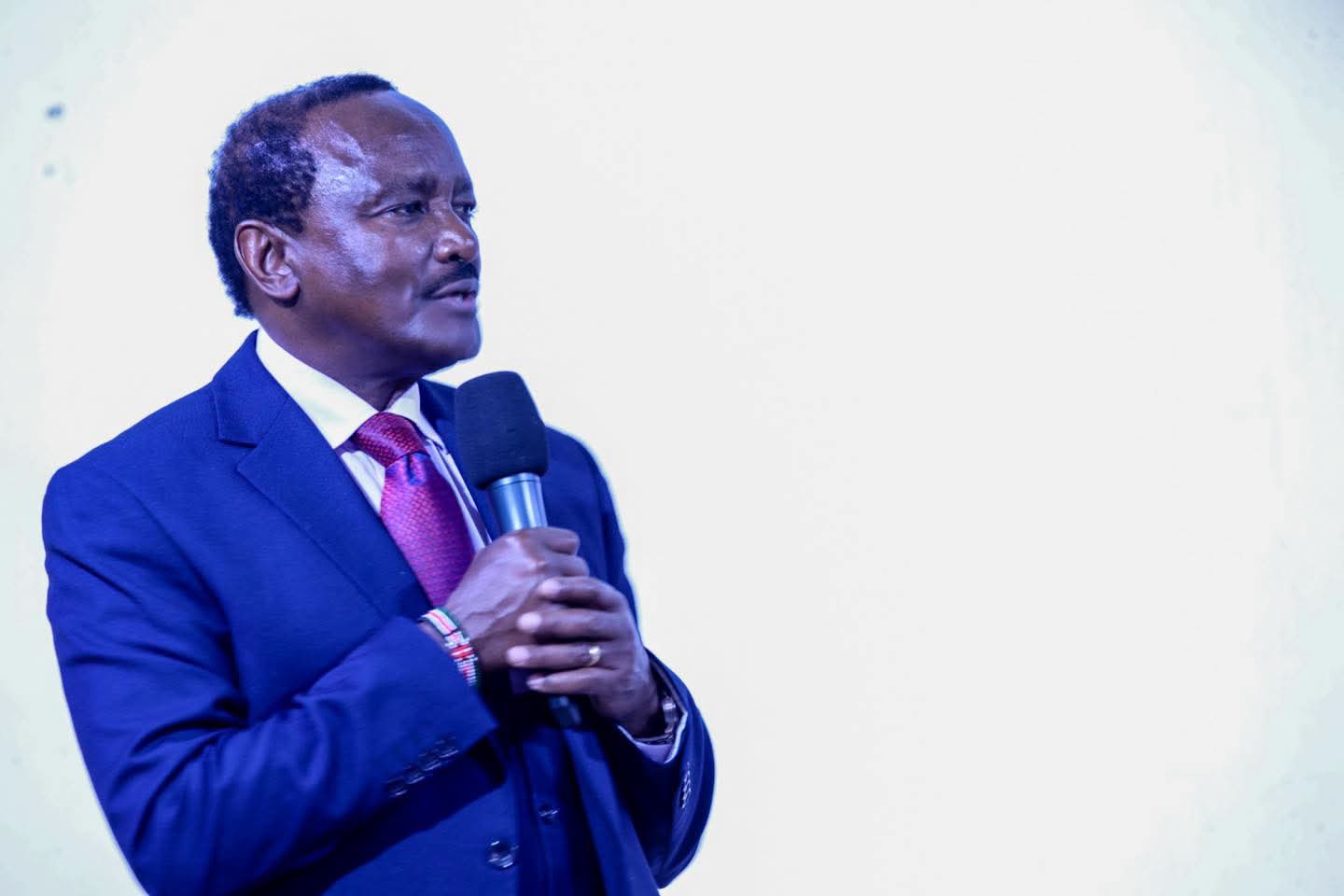
 Wiper Patriotic Front leader Dr Stephen Kalonzo Musyoka. File Photo.


By Andrew Mbuva.
Wiper Patriotic Front leader Dr Stephen Kalonzo Musyoka has warned against a proposal by the National Treasury to place the revenues of all 47 counties under a single national account controlled from Nairobi, saying such a move would undermine the spirit of devolution.
Speaking as Kenya marked the 16th anniversary of the promulgation of the Constitution of Kenya, 2010, Kalonzo said the country had made significant constitutional gains but continued to struggle with poor implementation of the law.
“We have a first-class Constitution and second-class compliance,” he said, arguing that Kenya's biggest challenge was not the Constitution itself but the failure by institutions and leaders to fully adhere to its provisions.
Kalonzo, who was the Vice President when former President Mwai Kibaki promulgated the Constitution at Uhuru Park on August 27, 2010, said the proposal to centralise county revenues would weaken devolution and give the National Treasury excessive control over county governments.
He accused the national government of routinely delaying the release of funds to counties, despite Article 219 of the Constitution requiring such funds to be transferred without undue delay and without deductions.
According to Kalonzo, delays in disbursements have forced some county governments to borrow from commercial banks to finance operations, even as they wait for funds constitutionally allocated to them.
He cited figures from the Controller of Budget showing that counties had accumulated Sh163.74 billion in pending bills as of December 2025, up from Sh128.94 billion four years earlier. Nairobi County alone, he said, owed suppliers Sh81.79 billion, while public hospitals in counties were awaiting Sh26.87 billion in unpaid Social Health Authority claims.
The former Vice President questioned how the Treasury could be entrusted with complete control of county revenues when it had failed to release the constitutionally guaranteed equitable share on time.
He noted that Article 225 of the Constitution already provides a legal mechanism for stopping the transfer of funds to a State organ in cases of serious breach, subject to parliamentary approval and public justification.
Kalonzo reiterated the Wiper Patriotic Front's position that the equitable share allocated to counties should be increased from the current 15 per cent to 35 per cent.
He said that under his administration, the county disbursement schedule would be gazetted and published every month, while interest arising from delayed transfers would be charged against the national government rather than county governments.
He further pledged that no function would be transferred to counties without the financial resources required to support it.
At the same time, Kalonzo challenged governors and county leaders to uphold accountability, saying the national government was not the only obstacle facing devolution.
He said county governments must maintain proper audit trails and ensure public resources are managed transparently.
Turning to electoral matters, Kalonzo linked the Constitution to the need to prevent a recurrence of the violence that followed the disputed 2007 General Election, which he said resulted in the deaths of more than 1,100 people and the displacement of over 600,000 others.
He said concerns surrounding the Independent Electoral and Boundaries Commission were matters of national security and not merely political positioning ahead of the 2027 General Election.
Kalonzo called for clarity on whether the voters' register was open to audit, whether election technology was being procured transparently and could be tested before polling day, and whether the review of electoral boundaries would be conducted within constitutional timelines.
“A stolen or mismanaged election does not remain a legal problem. It becomes a security problem, then a humanitarian one, and then a scar that outlives the people who caused it. We must not be taken there again,” he said.
The Wiper leader also ruled out supporting any constitutional amendment aimed at weakening devolution, independent commissions or the Judiciary, altering presidential term limits or creating new offices to serve what he described as elite political bargains.
He maintained that the power to amend the Constitution rests with the people, as provided for under Articles 255 to 257 of the Constitution.