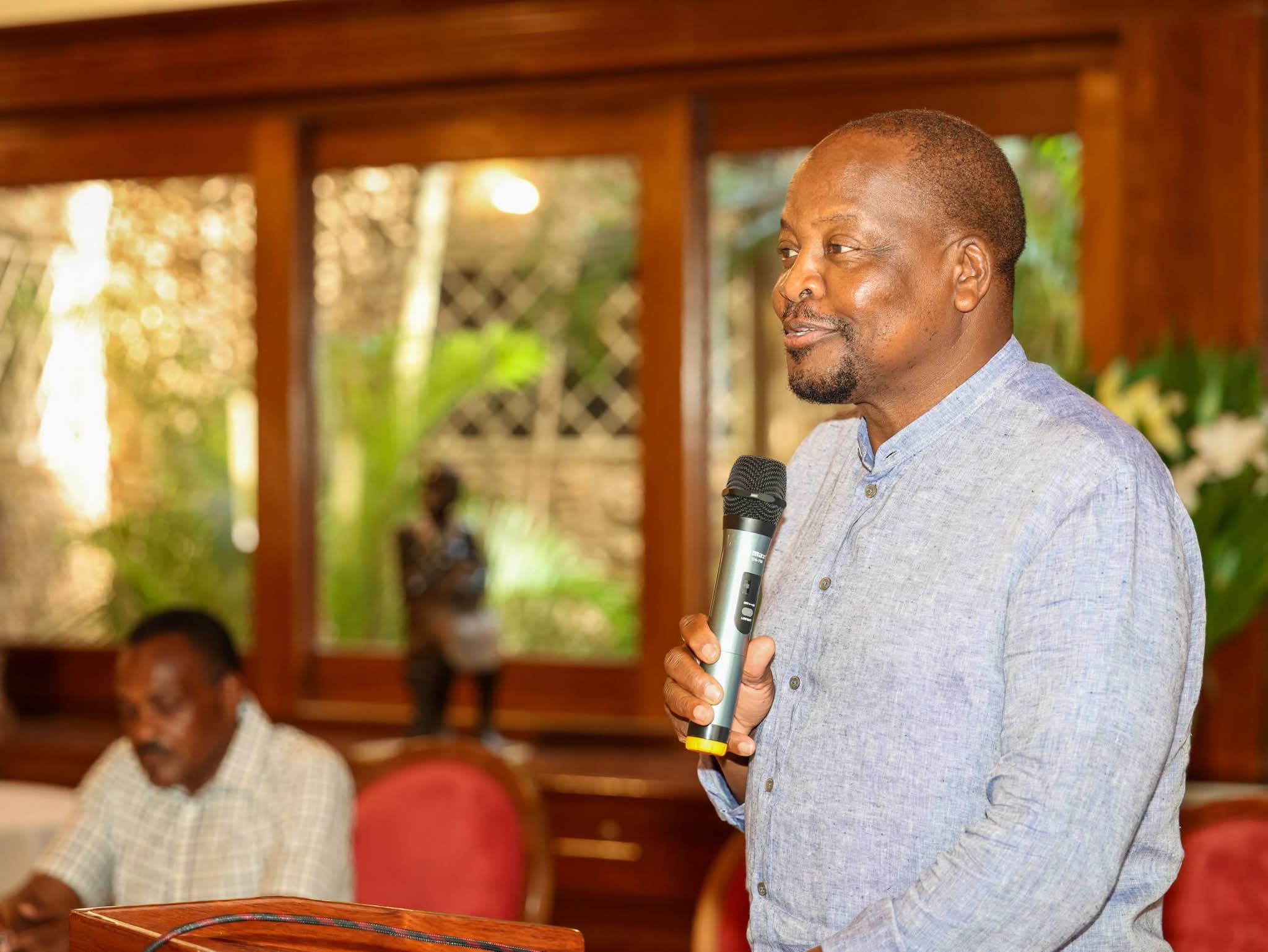
 Agriculture and Livestock Development Cabinet Secretary Mutahi Kwagwe appears before the Senate Standing Committee on Agriculture Livestock and Fisheries chaired by Bungoma Senator David Wafula Wakoli. Photo by Ben Okweingoti.


By Ben Okweingoti
Agriculture and Livestock Development Cabinet Secretary Mutahi Kagwe has urged the government to significantly increase budgetary allocations to the agriculture sector, warning that continued underfunding could undermine efforts to empower farmers, enhance productivity and make Kenya food secure.
Kagwe raised the concerns when he appeared before the Senate Standing Committee on Agriculture, Livestock and Fisheries, chaired by Bungoma Senator David Wakoli, to discuss the ministry's budgetary requirements for the 2026/2027 financial year.
According to the 2026 Budget Policy Statement (BPS), the ministry has received inadequate funding to effectively implement its programmes and support key agencies under its mandate.
The CS said agencies involved in agricultural research, pest control, regulation and food production were among those facing serious financial constraints.
Kagwe noted that despite agriculture contributing about 26 per cent of Kenya's Gross Domestic Product (GDP), the sector receives only about two per cent of the national budget.
“Agriculture is supposed to be funded to a tune of about 10 per cent of the country’s budget, but we receive only two per cent of that, and this means that agriculture is seriously underfunded and the general space of agriculture is underfunded,” Kagwe said.
Budget estimates show that the Agriculture and Livestock Development docket has been allocated a ceiling of Sh75.491 billion against a total resource requirement of Sh135.864 billion, leaving a funding gap of approximately Sh59.864 billion.
Kagwe said increased investment was necessary if Kenya was to expand agricultural production, promote value addition and improve productivity per acre.
“If we want agriculture to expand, if we want to get into value addition, if we want higher productivity per acre, then we must continue to allocate higher funds for agriculture,” he said.
Senator Wakoli acknowledged the funding deficit affecting the sector and pledged that the committee would table recommendations in the Senate pushing for increased allocations to critical agricultural institutions.
He particularly highlighted the need for additional funding for agencies responsible for agricultural production, regulation, research and other essential services.
“What they’ve prayed for is that their budget be increased, and as a committee, we shall table those recommendations in the Senate because agriculture is the backbone of our economy,” Wakoli said.
He added that the low allocations should not necessarily be interpreted as deliberate neglect of the sector, but said there was a need for gradual improvements in funding to enable critical agencies to effectively deliver on their mandates.
Wakoli was accompanied by committee members, Kisumu Senator Tom Ojienda and Embu Senator Alexander Mundigi.