


By Fredrick Kioko
The Machakos County Assembly has authorised the withdrawal of 50 per cent of the county’s proposed Sh17.8 billion budget for the 2026/2027 financial year, allowing the devolved unit to continue funding essential services as a prolonged budget stalemate persists.
The resolution, passed on Tuesday, permits the County Executive and the Assembly to access approximately Sh8.9 billion from the County Revenue Fund to finance recurrent and essential expenditure pending the approval of the full Appropriation Act.
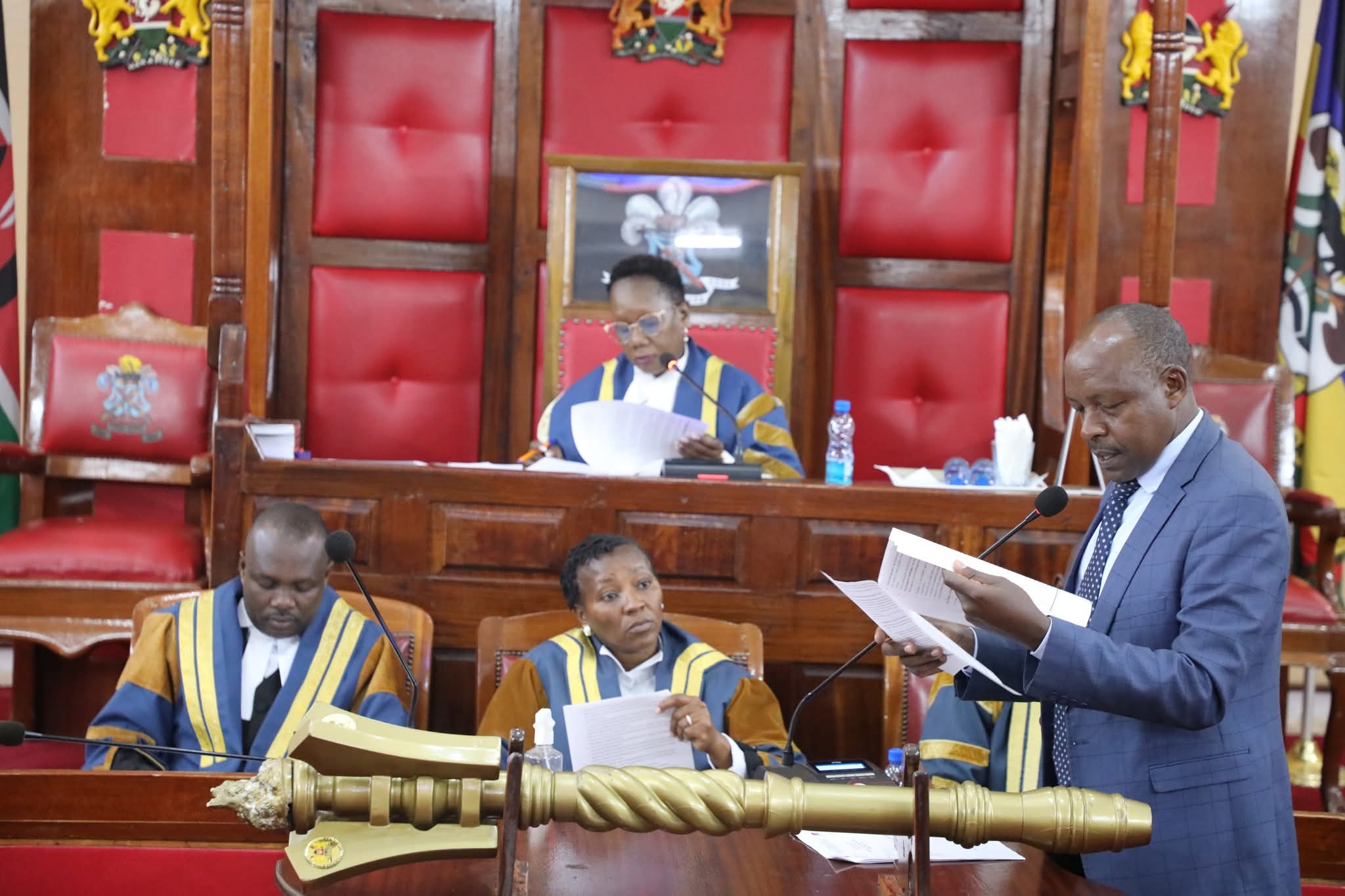
The motion was moved by Mua Ward MCA and Budget Committee member Francis Ngunga and seconded by nominated MCA Margaret Ndalana of Maendeleo Chap Chap.
Ngunga said the interim funding was necessary because the County Appropriation Bill had not been approved and assented to, leaving several critical programmes without adequate funding.
Among the areas affected are Early Childhood Development Education (ECDE), construction and renovation of ECDE classrooms, capitation for Vocational Training Centres, grading and murraming of access roads, water provision, ongoing road projects and settlement of pending bills.
The motion seeks authority to withdraw 50 per cent of the proposed Sh17,797,279,725 from the County Revenue Fund to finance essential expenditure for both the County Assembly and Executive until the full budget is approved.
During debate, Katangi MCA Felix Ngui described the delay as unprecedented, saying Machakos had never experienced a situation where the county lacked an approved budget since the advent of devolution in 2013.
Ngui blamed the prolonged delay on the Budget Committee, saying the committee should expedite the submission of the budget estimates to the Assembly for consideration and approval.
Kavyu MCA Francis Kavyu, meanwhile, raised concern over the growing burden of pending bills, saying the county had accumulated billions of shillings owed to contractors and suppliers.
Kavyu said the county's pending bills had risen from about Sh2 billion inherited at the beginning of the current administration to approximately Sh7 billion, leaving contractors, suppliers and their families struggling.
He questioned how the county intended to settle the outstanding debts when only Sh200 million had been allocated for pending bills in the proposed budget.
“These are sons and daughters of Machakos who provided services to the county,” Kavyu argued, noting that some contractors had allegedly been forced to sell property or face auctions as a result of delayed payments.
He also criticised the situation in ECDE centres, saying teachers had not been adequately employed, while Vocational Training Centres continued to face a shortage of instructors.
Kavyu said the county's youth employment programmes remained insufficient to address the scale of unemployment, noting that the recently graduated 1,000 Machakos Youth Service trainees represented only a fraction of the county's unemployed young people.
Mwala MCA Brian Kisila defended the Budget Committee, saying its members were committed to ensuring that the county budget served the interests of residents.
Kisila said residents had participated in public forums over the past four years and given their views on development priorities, but implementation had remained below expectations.
He called for an itemised budget that would clearly demonstrate how public resources would be allocated and spent.
Kisila also accused the county administration of launching projects while previous projects remained unpaid, claiming that contractors had suffered financial losses, with some allegedly losing property through auctions.
He further criticised delays in paying ECDE teachers and implementing road projects, arguing that development had not been distributed equitably across wards.
According to Kisila, some wards were allegedly disadvantaged when their MCAs disagreed with the county administration, a situation he said ultimately affected ordinary residents.
Kibauni MCA and Budget Committee Chairperson Paul Wambua acknowledged that Machakos was making history with the delayed budget, but defended the committee's position, saying the objective was to produce a budget that would deliver better services to residents.
Wambua said there had been a breakdown in communication between the County Executive and the Assembly, with several recommendations from MCAs allegedly not being incorporated into previous budgets.
He said the Assembly had approved budgets over the past four years, but implementation on the ground had not matched expectations.
Wambua cited poor roads, inadequate ECDE infrastructure and lack of ECDE teacher recruitment among the concerns that needed to be addressed in the new budget.
He also criticised the recent demonstrations at the county headquarters, saying budget-making should be conducted through established constitutional and legislative processes rather than on the streets.
Wambua urged Governor Wavinya Ndeti to engage directly with MCAs to resolve the impasse, insisting that the budget was a matter of public interest and not a personal contest between the Executive and the Assembly.
Speaker Ann Kiusya urged both sides to resolve their differences peacefully, warning against turning the budget dispute into a political or personal confrontation.
She said there was no need for the Assembly and Executive to fight because they were ultimately working for the same people.
“There is no personal vendetta in the budget issue. It is not the property of the Assembly or the Executive. It belongs to the people of Machakos,” Kiusya said.
She subsequently directed that the Assembly's authority to withdraw 50 per cent of the proposed budget be implemented to enable the county to continue financing essential operations.
The interim funding is expected to support recurrent expenditure, including salaries, health services and other critical county operations, as negotiations over the full Sh17.8 billion budget continue.
The budget stalemate has already sparked concern among civil society organisations and county employees.
On Monday, county workers staged a peaceful demonstration and presented a petition to the Assembly leadership, protesting delayed salaries and stalled service delivery.
The Assembly's latest resolution is expected to provide temporary financial relief, but the broader dispute over the proposed budget remains unresolved, with residents awaiting a final appropriation that addresses pending bills, infrastructure, education, water and other development priorities.