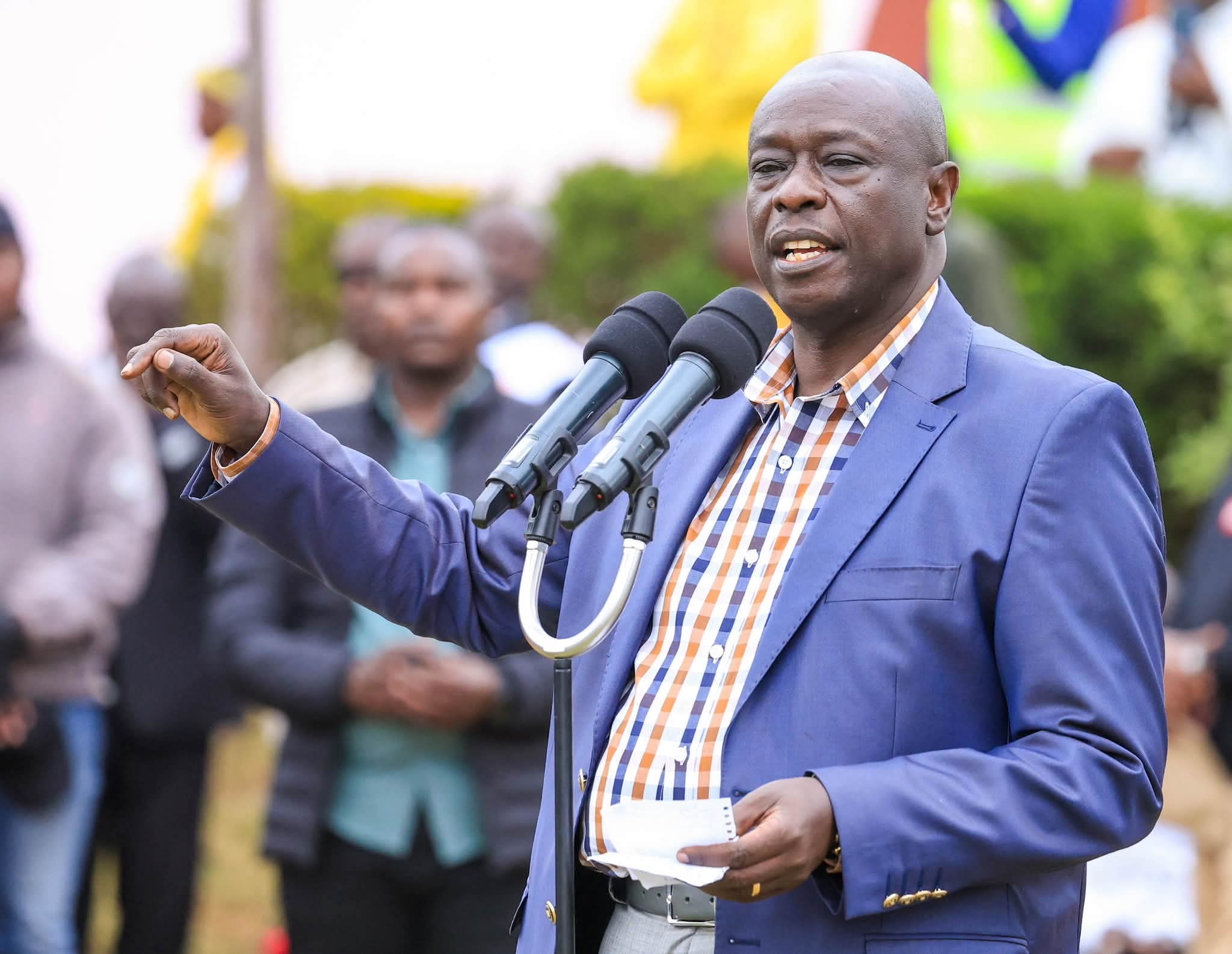
 Former Deputy President Rigathi Gachagua Speaking at Riiji Catholic Church on July 26. Photo Dennis Dibondo


By Dennis Dibondo
Former Deputy President Rigathi Gachagua has alleged that the Kenya Kwanza administration demanded a Sh3 billion bribe from the United Kingdom to renew the operational agreement for the British Army Training Unit Kenya (BATUK), forcing Britain to relocate a major military exercise to a neighbouring country.
Speaking during a church fundraiser at Riiji Catholic Church in Central Imenti on Sunday, Gachagua claimed the alleged demand led the UK to move its planned military exercise, Haraka Storm, which was scheduled to take place in Kenya between September and November.
The United Kingdom, through its Ministry of Defence, recently announced that the exercise would instead be conducted in a neighbouring country after the licences required for the operation were not approved.
The relocation comes amid months of uncertainty surrounding the proposed Defence Cooperation Agreement that governs BATUK's operations in Kenya. Members of Parliament have delayed ratifying the agreement over concerns that British soldiers accused of committing offences while on duty should face trial in Kenyan courts rather than in the UK. The debate has also been influenced by the unresolved 2012 murder of Agnes Wanjiru, whose body was found in a septic tank near a British military base.
However, Gachagua dismissed those concerns as the primary reason for the relocation, insisting the UK withdrew because it refused to pay the alleged bribe.
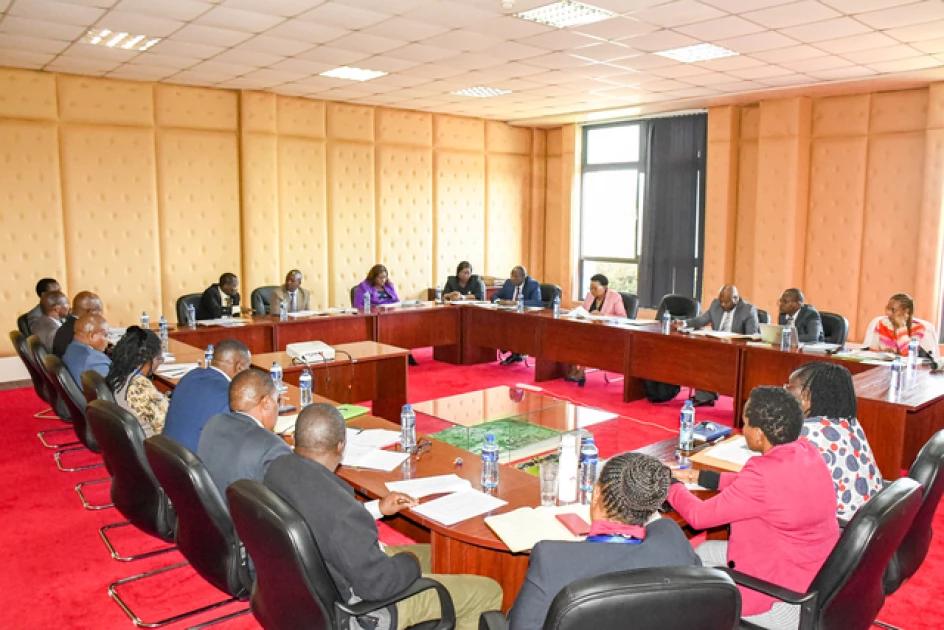
According to him, the Parliamentary Committee on Defence and Foreign Relations, chaired by Belgut MP Nelson Koech, allegedly demanded Sh3 billion to facilitate the renewal of the agreement.
"They were to take Sh2 billion to President William Ruto for use in next year's elections, but the British refused to pay and instead relocated the training to a neighbouring country," Gachagua claimed.
He argued that BATUK has been a major contributor to the economy of Nanyuki and surrounding areas, saying the military unit directly and indirectly employs more than 500 Kenyans through local procurement, transport, hospitality and other services.
"The British military base has created employment for hundreds of Kenyans and supported businesses in the region. If it relocates permanently, Nanyuki's economy will be severely affected," he said.
Gachagua further claimed that the town now faces economic decline following the relocation of the training exercise.
The former Deputy President also criticised Interior Cabinet Secretary Kipchumba Murkomen, accusing him of engaging in politics instead of addressing the country's security challenges.
He praised former Interior ministers John Michuki and Fred Matiang'i, saying they delivered results with minimal public rhetoric.
"Instead of working for Kenyans, Murkomen has been busy mobilising armed goons who are terrorising citizens," Gachagua alleged.
He further claimed that growing insecurity was damaging Kenya's international reputation and discouraging foreign visitors.
"Foreigners are asking whether Kenya is safe. I want to tell them it is not because there are too many goons almost everywhere," he said.
Gachagua went on to advise tourists to stay away from Kenya until security concerns are addressed, warning against a repeat of incidents in which visitors have lost their lives while touring the country.
He challenged Murkomen to assure the international community that criminal gangs would not be allowed to operate freely and also accused the government of issuing diplomatic passports to individuals linked to the Sudan conflict, claiming the passports had not been revoked.
Gachagua was accompanied by Nyandarua Senator John Methu, Ol Kalou MP Kamau Ngotho, former Agriculture Cabinet Secretary Mithika Linturi, Meru senatorial aspirant Mugambi Imanyara and other political leaders.
The allegations made by Gachagua had not been independently verified, and neither the Kenyan government, Parliament's Defence and Foreign Relations Committee, nor the United Kingdom had publicly responded to the specific bribery claims at the time of publication.