


By Andrew Mbuva
Civil society organisations have called on county governments to allocate dedicated funding for civic education on integrity and anti-corruption, saying public awareness is critical in preventing corruption before it takes root.
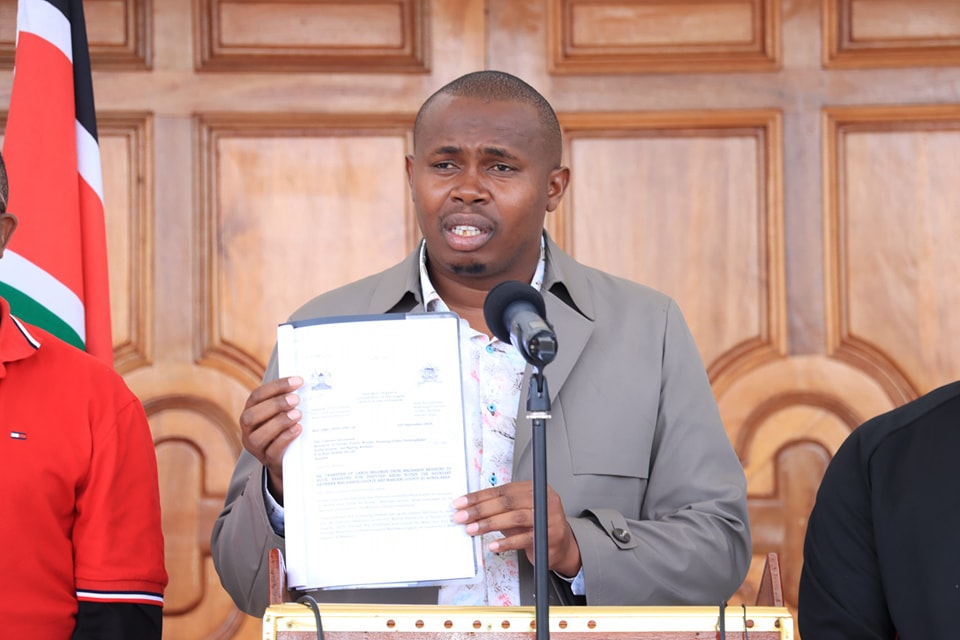
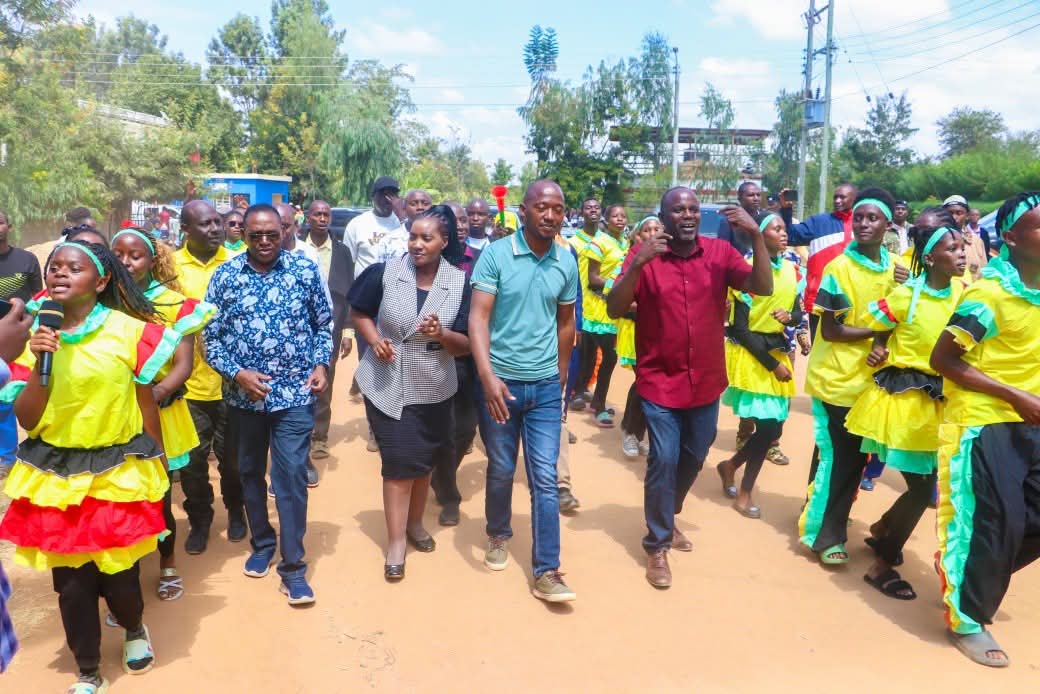
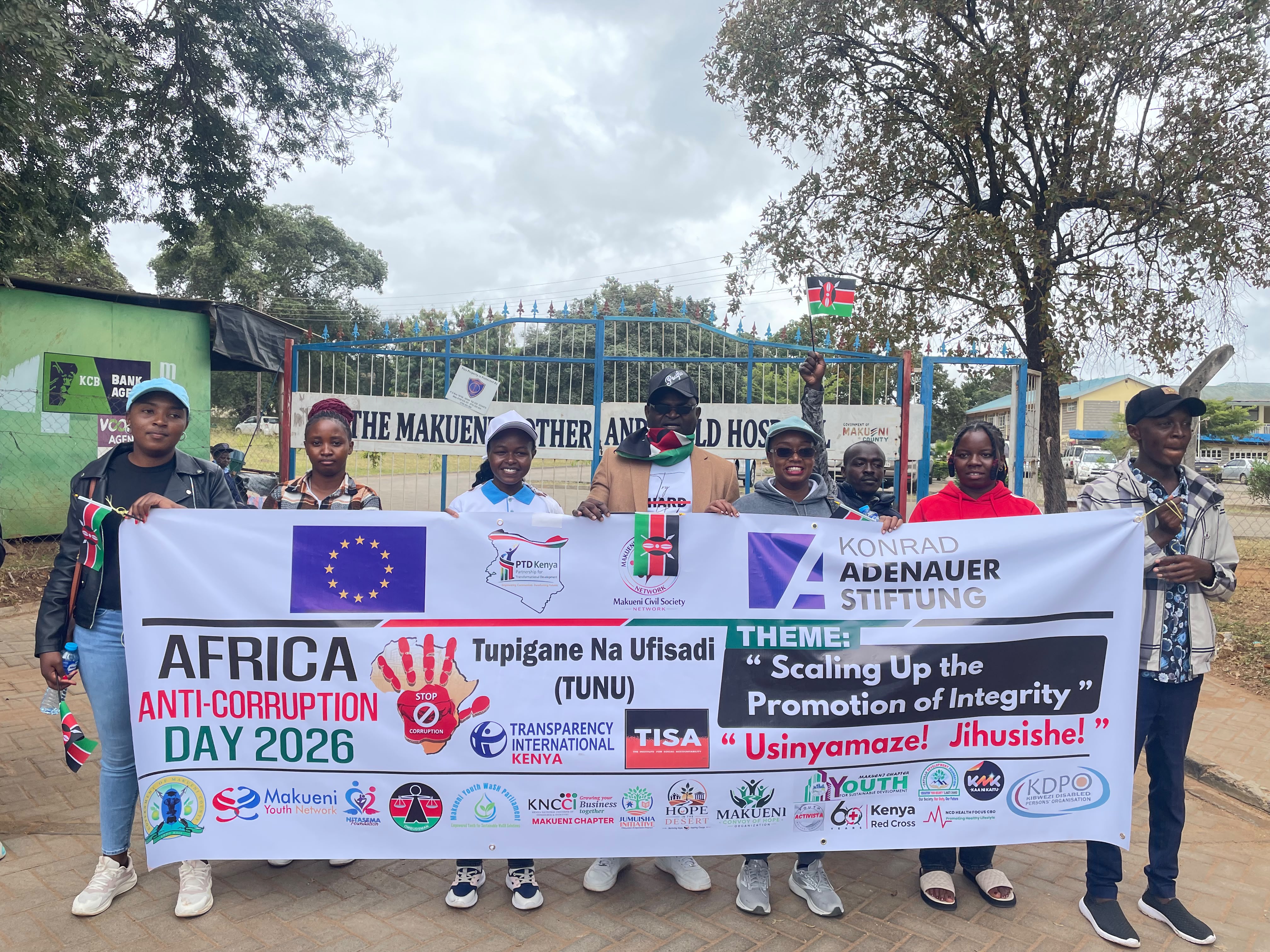
The appeal was made during the commemoration of the African Anti-Corruption Day held in Wote, Makueni County, where civil society groups, the County Government of Makueni, the Commission on Administrative Justice (Office of the Ombudsman) and other stakeholders renewed calls for stronger accountability and good governance.
Speaking during the event, Makueni Civil Society Network Coordinator Joseph Kioko said corruption continues to undermine development across key sectors, including education and healthcare, denying citizens quality public services.
He noted that delayed capitation for schools and inadequate funding for health services are among the effects of poor governance and misuse of public resources.
Kioko said the fight against corruption must begin at the family level, urging parents to instill integrity in children from an early age. He also challenged teachers to discourage examination cheating, arguing that corruption extends beyond the misuse of money and includes abuse of office, favoritism and other unethical practices.
He urged county governments across the country to set aside specific budgets for civic education, saying sustained public awareness campaigns would empower citizens to reject corruption and demand accountability from public institutions.
According to Kioko, investing in civic education would equip communities with the knowledge needed to identify and report corruption, ultimately fostering a culture of integrity and responsible leadership.
Human rights defender Justus Mutuku called for reforms to strengthen the Ethics and Anti-Corruption Commission (EACC), saying the agency should be granted autonomy to prosecute corruption cases after completing investigations.
Mutuku argued that under the current system, investigation files are forwarded to the Office of the Director of Public Prosecutions (DPP), which ultimately decides whether or not to prosecute suspects.
He said granting the EACC independent prosecutorial powers would eliminate delays, enhance accountability and strengthen the country's fight against corruption.
Mutuku also expressed concern that many corruption cases receive extensive media attention but lose momentum once they reach the courts, undermining public confidence in the justice system.
Commission on Administrative Justice representative Elizabeth Musembi emphasized that efficient service delivery is a constitutional right and called on citizens to demand quality services from both national and county governments.
She said the Office of the Ombudsman exists to promote good governance and ensure public institutions deliver services fairly, efficiently and in accordance with the law.
Musembi encouraged residents to report cases of maladministration and poor service delivery, noting that accountability in public offices is an important pillar in the fight against corruption.
Makueni County Executive Committee Member for Devolution, Public Participation, County Administration and Special Programmes Nicholas Nzioka said combating corruption requires collective responsibility from citizens, public servants and government institutions.
He said the county government has embraced digital payment systems to reduce opportunities for corruption and continues to work closely with civil society organisations to improve governance through constructive engagement.
Nzioka said Makueni values feedback from civil society and has consistently acted on recommendations aimed at improving service delivery.
He further noted that Makueni was the only county in Kenya to receive an unqualified audit opinion for the 2024/2025 financial year, describing it as evidence of the county's commitment to transparency, accountability and prudent financial management.
The stakeholders unanimously agreed that preventing corruption requires stronger institutions, informed citizens and sustained collaboration between governments, oversight agencies and civil society organisations.
They maintained that adequately funded civic education programmes and stronger anti-corruption institutions would play a pivotal role in building a more transparent, accountable and prosperous Kenya.