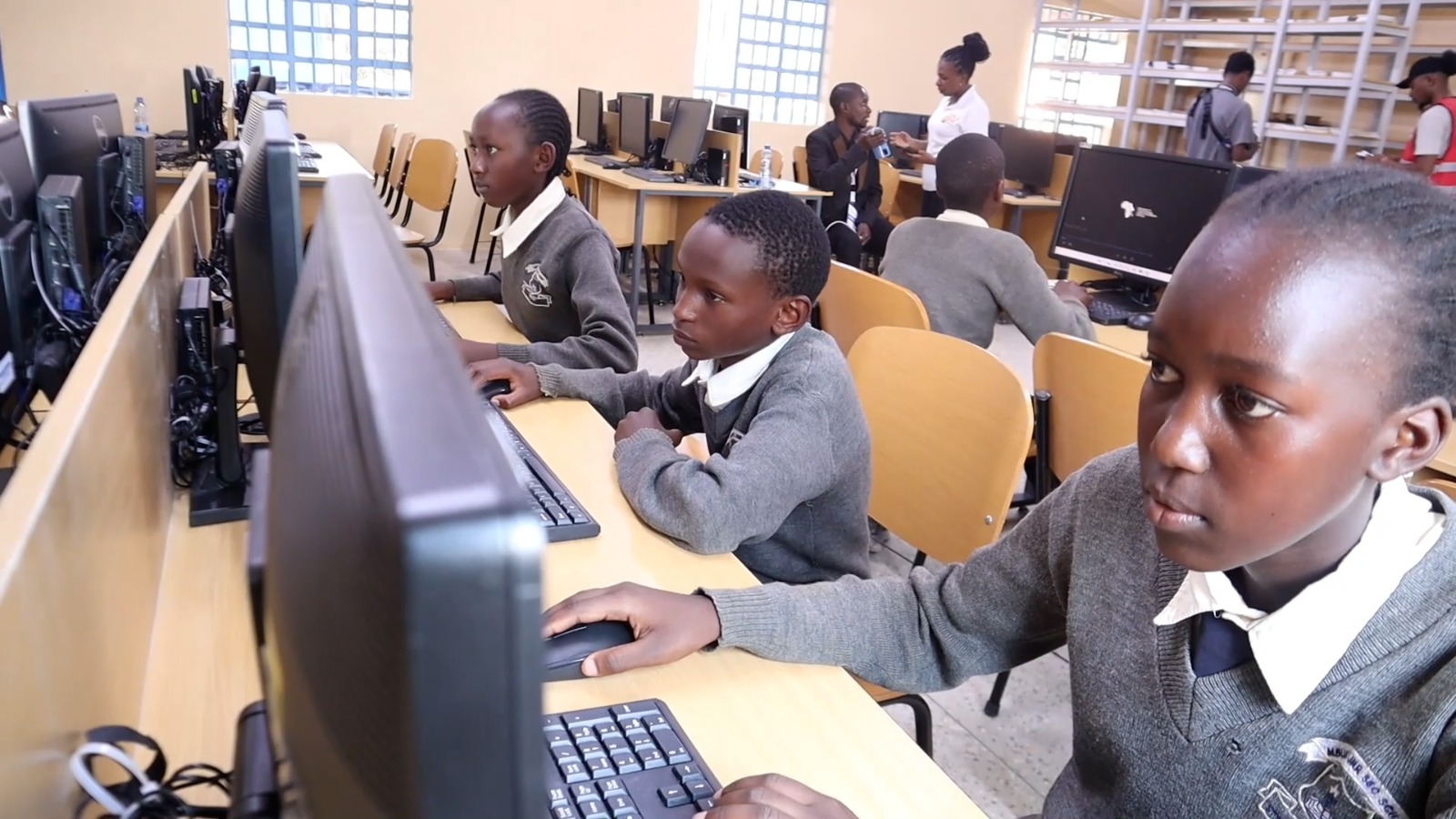
 Learners at Mbukoni Comprehensive School, Machakos County . Photo by Virginia Siebella


By Virginia Siebella.
Hundreds of learners at Mbukoni Comprehensive School in Machakos County are set to benefit from improved digital learning following the commissioning of a modern smart library aimed at bridging the technology gap in rural schools.
The facility, whose construction began in March this year, was officially completed and handed over on Thursday by Women in Science and Technology (WITIA), offering learners access to digital resources that had previously been out of reach.
Equipped with 37 computers and a collection of 2,300 textbooks, the smart library will serve more than 500 pupils, providing them with the tools needed to effectively participate in Kenya's Competency-Based Curriculum (CBC), which places a strong emphasis on digital literacy.
Speaking during the handover ceremony, Headteacher Winfred Mukami said the school had struggled to meet the digital learning demands of the CBC due to a lack of computers and internet-enabled facilities.
She noted that assignments requiring online research were often impossible for most learners to complete, with only two or three pupils in a class of 40 returning with finished work because they had access to digital devices outside school.
For many students, the new facility represents their first meaningful interaction with technology.
One of the beneficiaries, Grace Mutheu, described the smart library as life-changing, saying she had never used a computer before.
She added that the government-issued digital tablets had become unreliable over time, making the new computer lab an invaluable resource that will enable learners to study more effectively and improve their digital skills.
Women in Science and Technology (WITIA) proprietor Eunice Pohlmann said the project was designed to close the digital divide that continues to disadvantage learners in rural communities.
She said every child, regardless of where they live, deserves equal access to technology and quality education, adding that the smart library will expose pupils to global knowledge and opportunities while preparing them for a technology-driven future.
The initiative received backing from the Ministry of Education, with Stephen Barongo, Director of Basic Education, reaffirming the government's commitment to ensuring equitable access to education through digital inclusion.
Barongo said partnerships between government, private organizations and development partners are critical in expanding access to modern learning facilities and ensuring no learner is left behind.
The project also received support from the Rotary Club of Karen, whose President Lindsay emphasized the importance of identifying deserving schools and working with reliable partners to deliver sustainable educational interventions.
The newly commissioned smart library is expected to significantly enhance learning outcomes at Mbukoni Comprehensive School by providing learners with reliable access to digital resources, research materials and technology skills essential for success in the Competency-Based Curriculum and beyond