 Kenya has officially launched the long-awaited modernization of Jomo Kenyatta International Airport (JKIA) after signing a Sh154.2 billion contract aimed at expanding and upgrading the country's main aviation gateway.


By Fredrick Kioko,
Kenya has officially launched the long-awaited modernization of Jomo Kenyatta International Airport (JKIA) after signing a Sh154.2 billion contract aimed at expanding and upgrading the country's main aviation gateway.
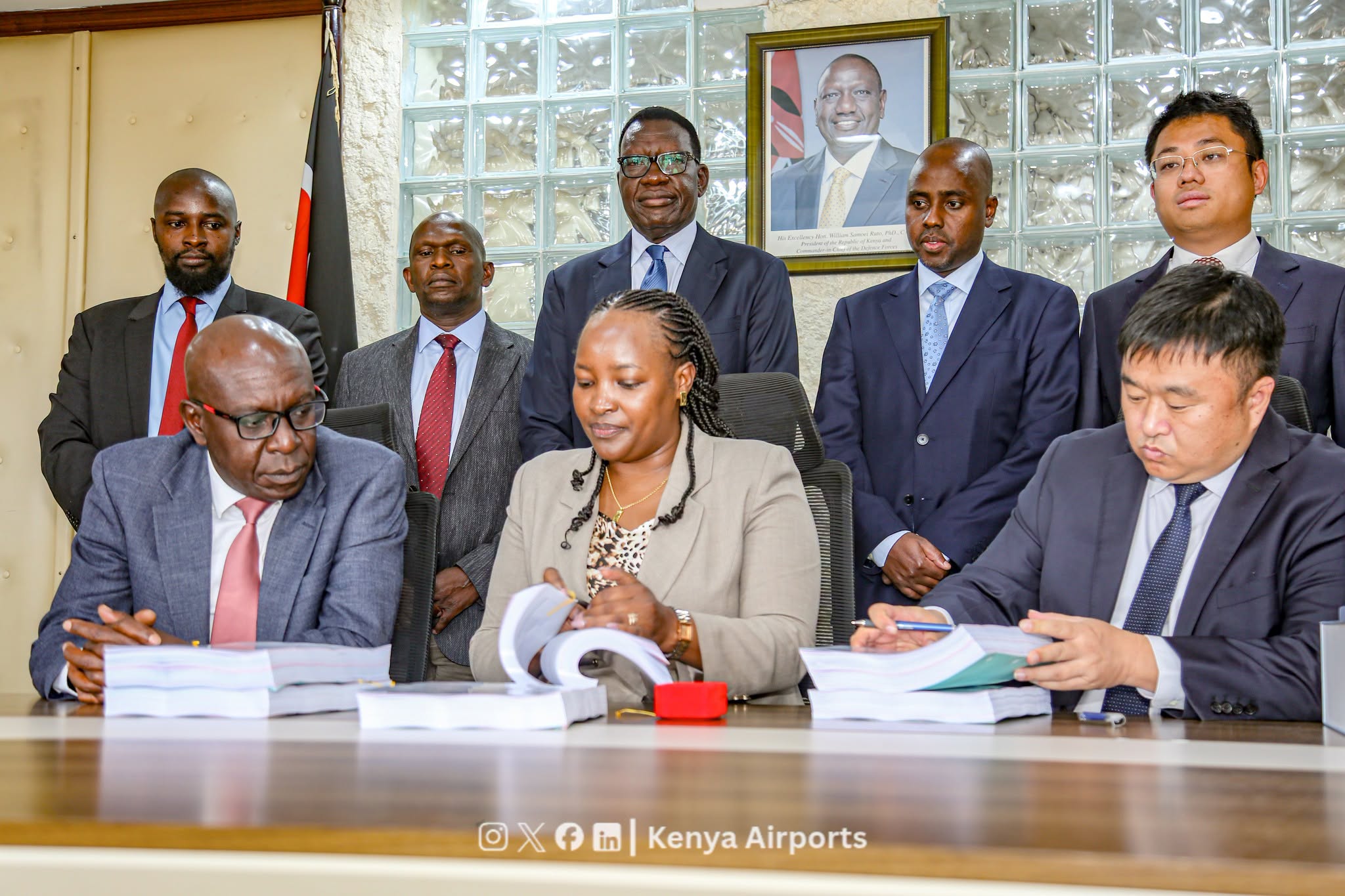
The agreement was signed by Aviation and Aerospace Development Principal Secretary Teresia Mbaika and CRBC General Manager Yu Xiaodong in the presence of Roads and Transport Cabinet Secretary Davis Chirchir, Kenya Airports Authority Managing Director Moses Wekesa and other senior government officials.
According to the government, the project is anchored on the JKIA Master Plan and is designed to significantly boost airport capacity while modernizing critical infrastructure. The expansion will increase the capacity of the existing terminal from 7.5 million passengers annually to 12 million, while a new terminal will add capacity for another 10 million passengers. Upon completion, JKIA will be capable of handling up to 22 million passengers every year.
Officials say the investment will strengthen Kenya's position as East Africa's leading aviation hub, improve passenger experience, enhance cargo handling services, and support economic growth through increased global connectivity.
However, the deal has already attracted scrutiny from critics and transparency advocates who are demanding greater disclosure of the project's contractual and financing details.
Concerns have been raised following reports that Zimbabwean businessman Wicknell Chivayo-linked IMC Construction was included as a joint venture partner alongside entities associated with China Communications Construction Company (CCCC), the parent company of CRBC.
Critics are also questioning the limited public disclosure surrounding the agreement, including financing arrangements, procurement details, project milestones, variation clauses, and independent oversight mechanisms.
The debate has reignited broader concerns about accountability in large-scale public infrastructure projects. While few dispute the need to upgrade JKIA, questions remain over whether taxpayers will receive full value for the Sh154.2 billion investment and whether sufficient safeguards are in place to ensure transparency and prevent cost escalations.
As preparations for the project move forward, pressure is mounting on the government to release key contract documents and provide assurances that the modernization programme will be implemented openly, efficiently, and in the best interests of Kenyan taxpayers.
With JKIA serving as Kenya's primary international gateway, the project is expected to remain under intense public scrutiny as stakeholders seek answers on both its economic impact and the management of one of the country's most expensive infrastructure undertakings.