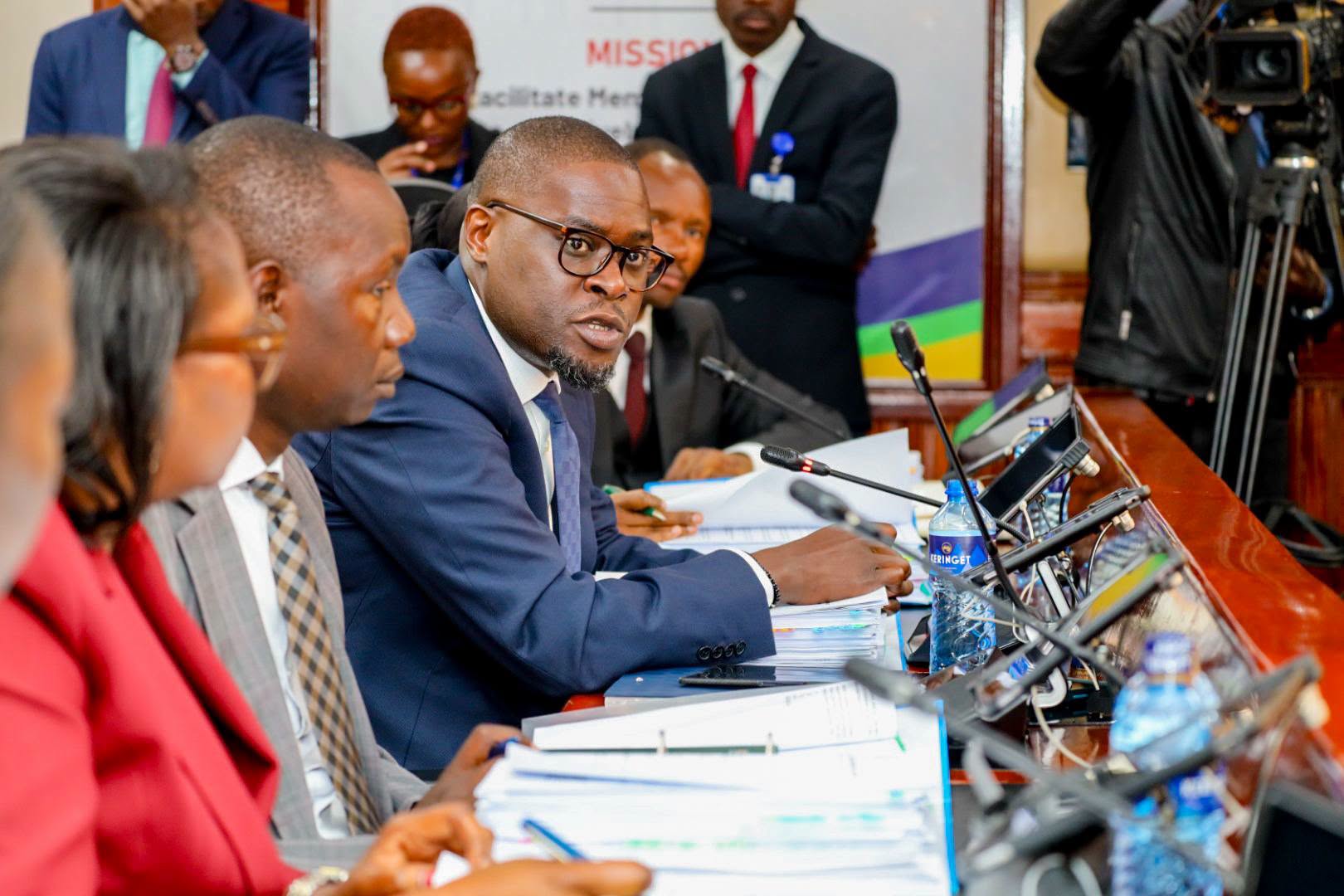
 The Senate Standing Committee on Finance and Budget, chaired by Mandera Senator Ali Roba, on Thursday grilled Nairobi Governor Johnson Sakaja over procurement compliance and statutory reporting concerns raised by the Public PPRA.


By Fredrick Kioko,
The Senate Standing Committee on Finance and Budget, chaired by Mandera Senator Ali Roba, on Thursday grilled Nairobi Governor Johnson Sakaja over procurement compliance and statutory reporting concerns raised by the Public Procurement Regulatory Authority (PPRA).
The session focused on allegations of failure by Nairobi City County to upload mandatory procurement data to the Public Procurement Information Portal (PPIP) and claims of unauthorized modifications to standard tender documents across several financial years.
Appearing before the committee, Governor Sakaja attributed reporting gaps in the 2022/23 financial year to administrative transitions following his assumption of office. He told senators that the county has since uploaded consolidated procurement plans, contract awards, and termination records to the PPIP platform.
To address recurring reporting challenges, Sakaja said the county had strengthened its procurement systems by recruiting 25 professional supply chain officers, conducting staff training, and investing in ICT infrastructure to improve compliance and efficiency.
On allegations that the county altered standard tender documents, the governor maintained that the adjustments were lawful and permitted under Section 74 of the Public Procurement and Asset Disposal Act, 2015. He argued that the changes were intended to align procurement documents with the technical requirements of specific county projects without undermining transparency or fair competition.
Sakaja further distanced his administration from historical procurement concerns linked to contracts undertaken by the now-defunct Nairobi Metropolitan Services (NMS), stating that such matters fall outside the jurisdiction of the current county government.
Addressing questions on statutory levies and pending bills, county officials said levies are deducted and remitted upon payment to suppliers, while outstanding debts remain captured in a verified pending bills register and will be settled progressively as funds become available.
However, lawmakers subjected the governor’s explanations to intense scrutiny.
Kakamega Senator Boni Khalwale questioned the county’s justification for modifying tender documents, arguing that the response appeared contradictory and effectively admitted to making alterations.
“That in itself is a contradiction. You are therefore confirming that, yes, you made those alterations. That should worry you, Governor, on the quality of this answer,” Khalwale said.
Nominated Senator Essy Okenyuri also raised concerns over the lack of clear timelines for settling pending bills, noting that while the county acknowledged the debts, it had failed to commit to specific payment dates.
Committee Vice Chairperson Senator Tabitha Mutinda commended the county for submitting detailed responses and supporting documentation but reminded officials that compliance with procurement regulations remains mandatory.
“No money has been lost as far as these concerns have been raised. It’s not really an audit issue of where is this amount or where it has been taken. It’s a matter of why your team, Governor, is not doing what they are supposed to do,” Mutinda stated.
Given the volume and technical nature of the documents presented, the committee ruled that immediate verification was not possible and directed the PPRA technical team to conduct an independent review of the county’s submissions.
Chairperson Ali Roba instructed PPRA officials to analyze the responses and submit a comprehensive validation report to the Senate before the committee reconvenes with Nairobi County officials for a final determination.
“Considering every data being shared is in your system, and the system is not within the committee’s purview at the moment, it is only fair that we give you time to review it and report back on whether the concerns raised have been satisfactorily addressed,” Roba said.
The committee is expected to revisit the matter once the PPRA completes its assessment.