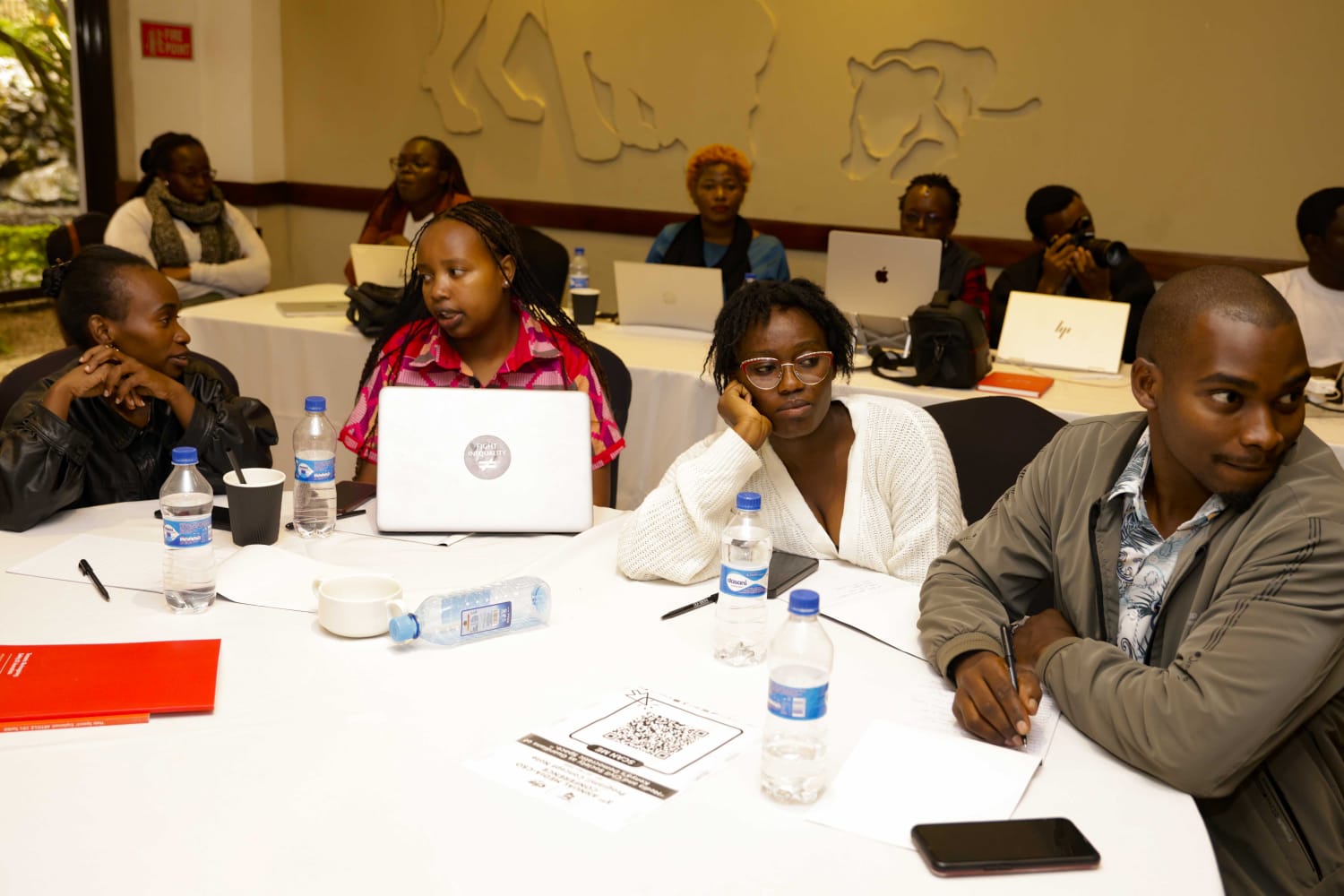
 Journalists Keenly following through a Session during the 3rd Annual Media–CSO Conference in Nairobi on November 19, 2025. Photo by Andrew Mbuva


By Andrew Mbuva
The psychological well-being of Kenyan journalists is emerging as one of the most urgent yet overlooked human rights concerns, Kenya National Commission on Human Rights (KNCHR) CEO Dr. Bernard Mogesa has warned.
Speaking during the 3rd Annual Media–CSO Conference in Nairobi, Dr. Mogesa said that the trauma, burnout, and mental health struggles facing media practitioners and human rights defenders are not personal shortcomings, but the direct consequence of the immense pressure they face while holding power to account.
He stressed that journalists’ right to mental health—guaranteed under Kenya’s Constitution and international law—has long been neglected, and called for “structural investment in mental wellness” including formal, funded psychosocial support systems for media workers and activists who routinely face threats, harassment, and trauma.
Dr. Mogesa’s remarks set the tone for the two-day conference themed “Media and Civil Society as Guardians of Kenya’s Democratic Space.” He positioned mental wellness not as a peripheral issue, but as a core pillar of human rights infrastructure necessary for safeguarding Kenya’s democratic order.
The KNCHR boss painted a stark picture of the shrinking civic space in Kenya, warning that growing cases of state aggression, censorship, intimidation, and the use of vague or punitive laws—such as the Computer Misuse and Cybercrimes Amendment Bill—constitute an assault on constitutionally protected rights.
“When a journalist is threatened for a story, the public’s right to information is effectively denied,” he said. “When activists are arrested for peaceful protest, their right to assembly is crushed.”
KNCHR, he noted, has been at the forefront of challenging such laws through strategic litigation, monitoring violations, and holding duty-bearers accountable.
Dr. Mogesa underscored the powerful synergy between media and civil society, describing it as “the ecosystem that makes oversight possible.”
He said the collaboration—where journalists expose wrongdoing and CSOs pursue accountability—forms the backbone of Kenya’s democratic project and must be defended against any attempts to disrupt or silence it.
The CEO also raised alarm over the financial fragility of both media houses and civil society organisations, warning that overdependence on external donors is weakening institutions that play a crucial role in defending human rights.
He urged exploration of domestic funding models and stronger solidarity networks to ensure Kenyan democracy is protected by resilient, locally sustained institutions.
As Kenya heads toward future electoral cycles, Dr. Mogesa highlighted new digital threats—including disinformation, surveillance, and restrictive cyber laws—that risk distorting the democratic process.
He called for enhanced digital literacy, cyber-resilience, and ethical journalism to protect the integrity of information during elections and ensure citizens make informed choices.
In his closing remarks, Dr. Mogesa reaffirmed KNCHR’s commitment to defending journalists and civil society actors through legal support, documentation of violations, and advocacy at national and international levels.
“The story of Kenya’s democracy is being written by you,” he told participants. “When the media is silenced and civil society is shackled, human rights are the first casualty. But when you thrive—when you speak truth to power without fear—our democracy thrives.”
The conference, which brought together journalists, editors, CSOs, regulators, technologists, legislators, and human rights institutions, concluded with a renewed resolve to safeguard Kenya’s democratic space amid rising threats.