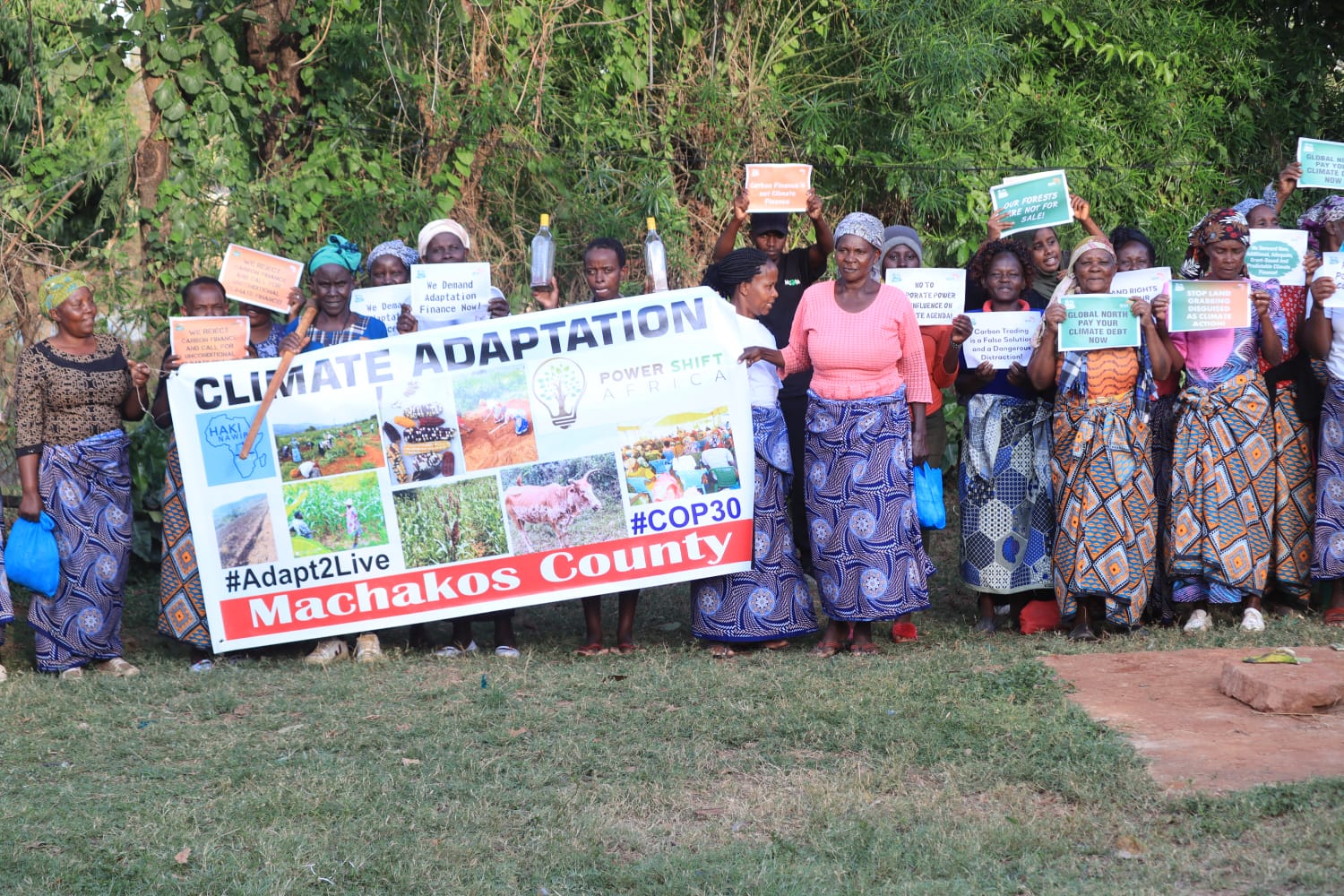
 Muvuti women stage demo demanding their voices to be heard in the ongoing cop30 summit in Brazil. Photo by Virginia Siebella


By Virginia Siebella
As global climate negotiations enter their fourth day in Belém, Brazil, smallholder farmers in Muvuti, Machakos County, say they continue to be sidelined—despite being among those hardest hit by the climate crisis.
For Victor Musyoki, a farmer from Muvuti Kiima Kimwe, the worsening droughts and failed harvests are a stark reminder of what he calls “climate injustice” driven by industrialized nations.
“Everyone attending the summit in Brazil must push for compensation from countries like those in Europe and China, who caused this climate disaster,” he said. “The sun is burning us, our animals are dying, and for the past thirty years, no one here has harvested more than two bags of maize.”
David believes climate finance from the global North should prioritize African countries where, he says, “the crisis is no longer climate change—it is a full-blown emergency.” He also laments the loss of rainfall once supported by the Congo Forest, now severely degraded by deforestation and rising carbon emissions.
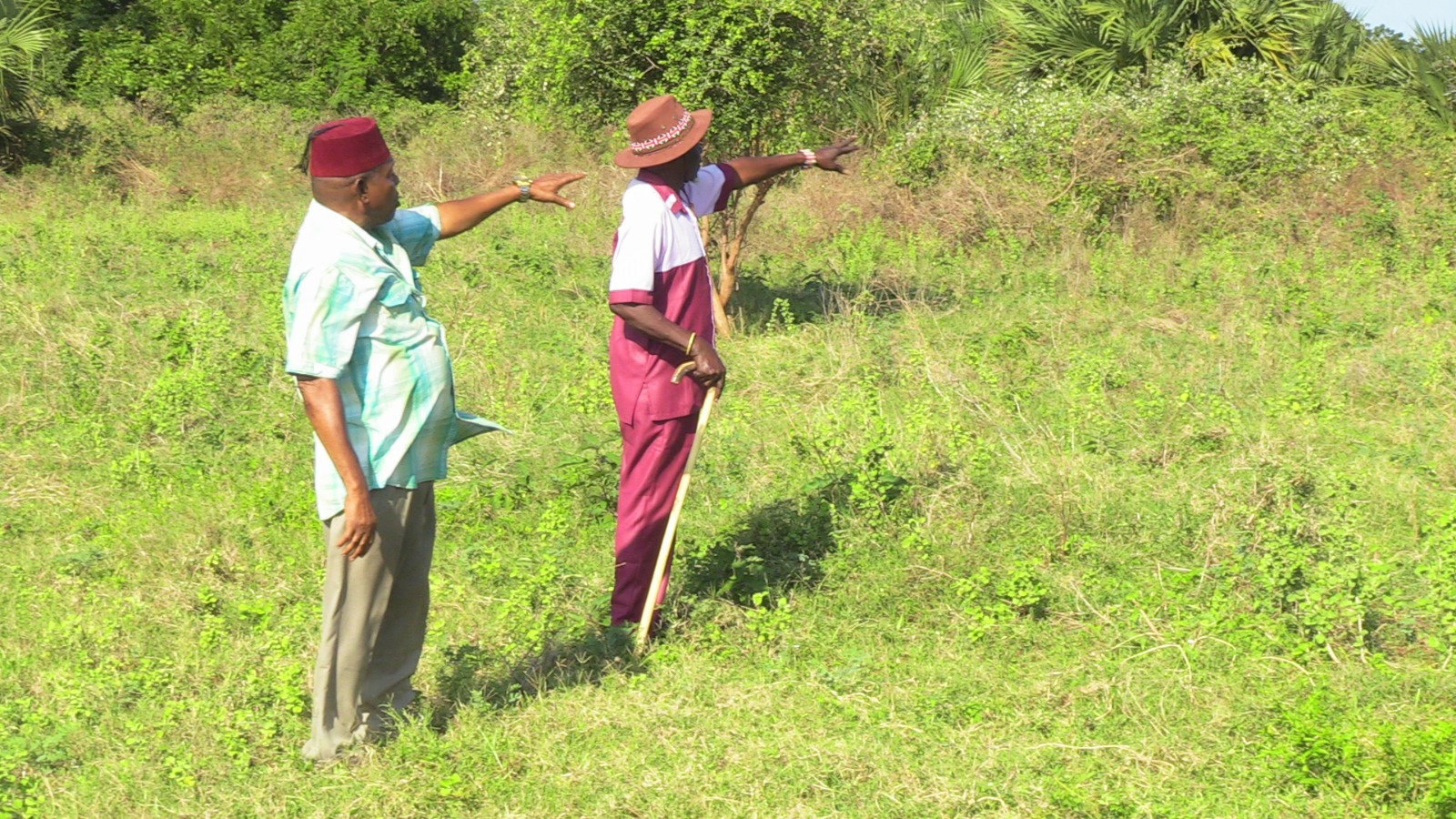
In Muvuti, community members are working to reforest degraded land, but David admits the efforts are minimal. “We need more resources—money, time, and technical support. This will take years,” he said.
Miriam Wanza, an agroecology farmer, notes that unpredictable weather patterns have disrupted seed germination, leading to reduced food production. Another farmer, Elizabeth Mbithi, says locals are adapting by planting water-retaining crops such as banana circles and fruit trees.
“The food crisis has ripple effects—children are dropping out of school, and families are struggling to stay healthy,” she said.
Ahead of COP30, Muvuti farmers organized a demonstration and pre-COP engagement to demand recognition of their knowledge and experiences in global climate talks. “We are the real experts in agriculture, yet our voices remain unheard,” one farmer lamented.
Agroecology expert Peter Nzioka echoed their frustrations, saying local farmers’ rights—especially regarding indigenous seeds—must be protected. “Criminalizing traditional seeds is denying us sleep,” he said. “These seeds are more resilient and affordable than certified ones.”
He pointed to erratic rainfall patterns, with only two showers recorded between October and November, as evidence that hybrid seeds cannot withstand prolonged dry spells. “Indigenous seeds can,” he emphasized.
Elizabeth Mwangangi, the Assistant Chief of Muvuti Sublocation, said the community is contributing to the government’s goal of planting 15 billion trees by 2032. “We’ve achieved about 60 percent so far,” she said, noting challenges such as water scarcity, ant infestations, and floods that sweep away young trees.
Despite such efforts, many grassroots farmers remain excluded from international climate forums. “We never get visas or invitations, yet we carry the burden of climate change,” one farmer said bitterly.
A recent global report placed much of Africa on the hunger map—an image that Muvuti farmers say mirrors their struggles.
Leonida Odongo, Executive Director of Haki Nawiri Afrika, said climate finance must prioritize grassroots farmers to help them scale up community-based adaptation initiatives.
“We are promoting agroecology enterprises where communities can process food, earn income, and build resilience,” she explained.
She described Kenya’s inclusion on the hunger map as “saddening, disheartening, and embarrassing,” given that the country has 60% arable land and a youthful population. “There is enough food for everyone,” she said. “Agroecology offers the most sustainable path to lifting Kenya—and Africa—off the hunger map.”
Caro from Ibon International also criticized the criminalization of indigenous seeds, calling it an unjust burden on poor farmers. “Their knowledge is valuable and should be recognized as part of climate solutions,” she said.
On carbon trading, Caro warned that market-driven schemes are overshadowing local realities. “We used to have reforestation projects. Now we have carbon trading programs run by grassroots groups, but the global North is shifting its responsibility to African farmers,” she said.
She urged developed nations to cut emissions and provide adaptation funding. “We are not the cause of this crisis,” she said. “The global North must act—and support those on the frontlines of climate change.”